The right-wing Alternative for Germany (AfD) party could form the first regional government in its history
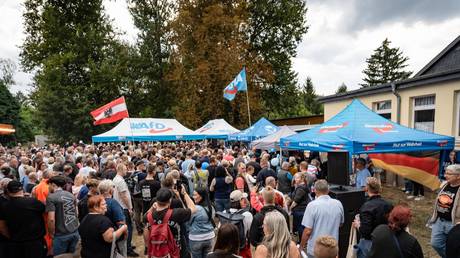
This weekend, Germans in the state of Saxony-Anhalt will elect their regional legislature and, by proxy, the new state government. A normally routine event in German political life that happens every five years, this year’s vote is drawing attention far beyond the state as its results could send shockwaves through German and, arguably, European politics.
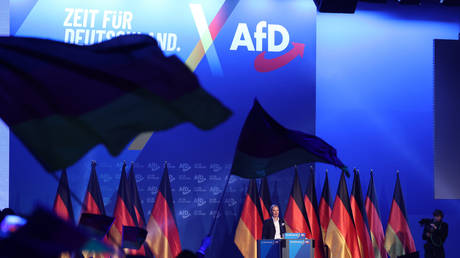
The right-wing Alternative for Germany (AfD) – known for its anti-immigration stance – leads polls by a wide margin and could secure enough seats to form the regional government even if all other parties refuse a coalition with it.
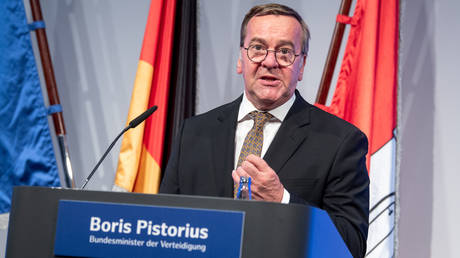
Berlin is apparently so wary of this potential outcome that it is actively preparing mechanisms to cut a potential AfD government off from some federal resources, such as the intelligence-sharing network, according to Defense Minister Boris Pistorius.
In this article
The AfD enjoys between 40% and 43% support in the state – about double that of Chancellor Friedrich Merz’s Christian Democratic Union (CDU) at 22-23%, according to the latest surveys conducted on behalf of the public broadcasters German ZDF and ARD.
Should those numbers hold, the AfD could emerge as the only political group in the parliament capable of forming a government, because all other parties would have to put together a broad coalition to challenge it. Such a coalition would require the right-of-center CDU to enter an agreement with The Left – the successors of the former East Germany’s Communist Party, which is projected to finish third. Such a scenario was already rejected out of hand by current Saxony-Anhalt government head Sven Schulze, the CDU’s leading candidate.
The election could also be a serious blow to the CDU, the party that has dominated the political landscape in Saxony-Anhalt since Germany’s reunification.
Saxony-Anhalt: Mirror of German woes
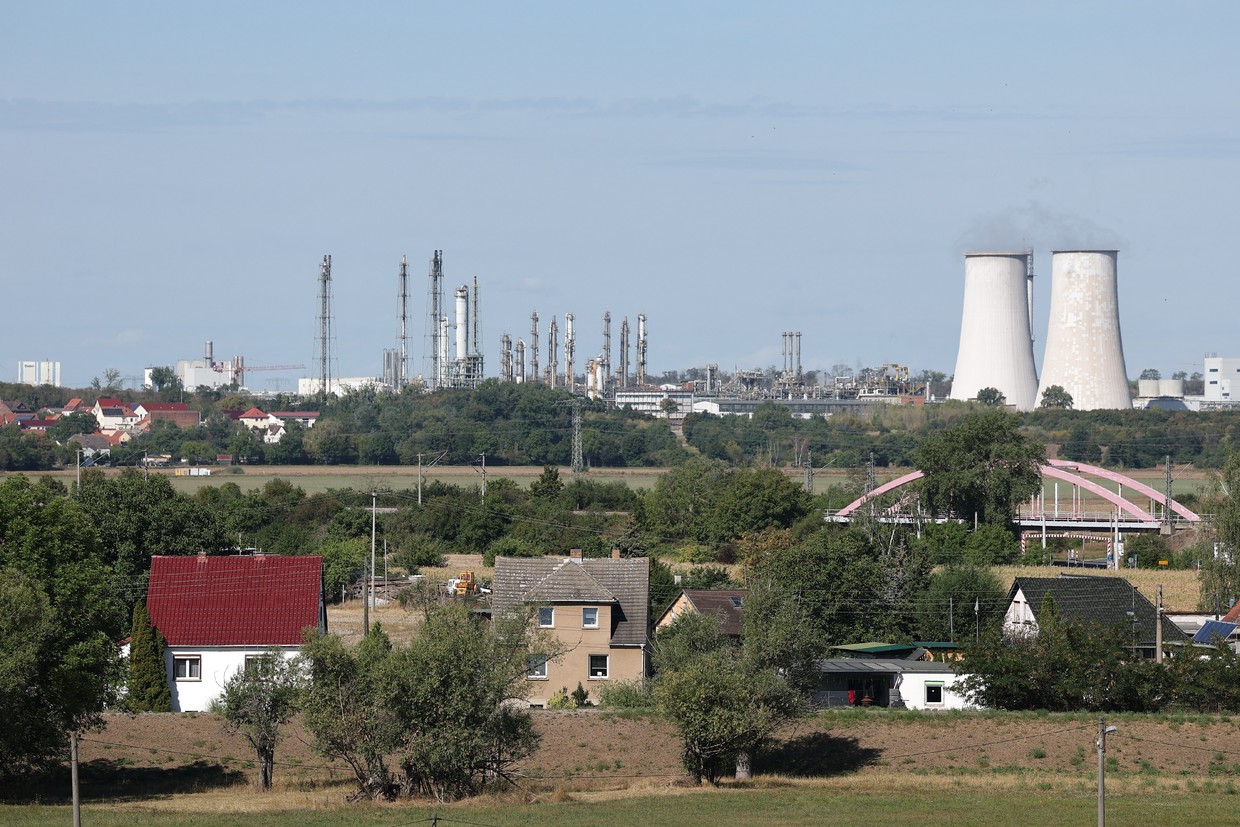
Saxony-Anhalt is a relatively sparsely populated, predominantly rural state but it also has a sizeable chemical industry. In many ways it has become a reflection of the troubles facing the entire German economy.
Germany’s decision to abandon cheap Russian gas imports in 2022 has played a major role in slowing down the German economy. It contracted in both 2023 and 2024, the first back-to-back annual decline in more than two decades, and grew only by 0.2% in 2025. Corporate insolvencies also rose by more than 22% in each of those years, according to official data.
The residents of Saxony-Anhalt felt the crisis first-hand. Over 11,000 people lost their jobs in the state’s manufacturing sector since the escalation of the Ukraine conflict in 2022. Last year, the state’s real GDP contracted by 0.2% against the backdrop of a nationwide stabilization.
The state’s political agenda is thus dominated by economic issues, according to ZDF polling.
‘The most dangerous man in Germany’
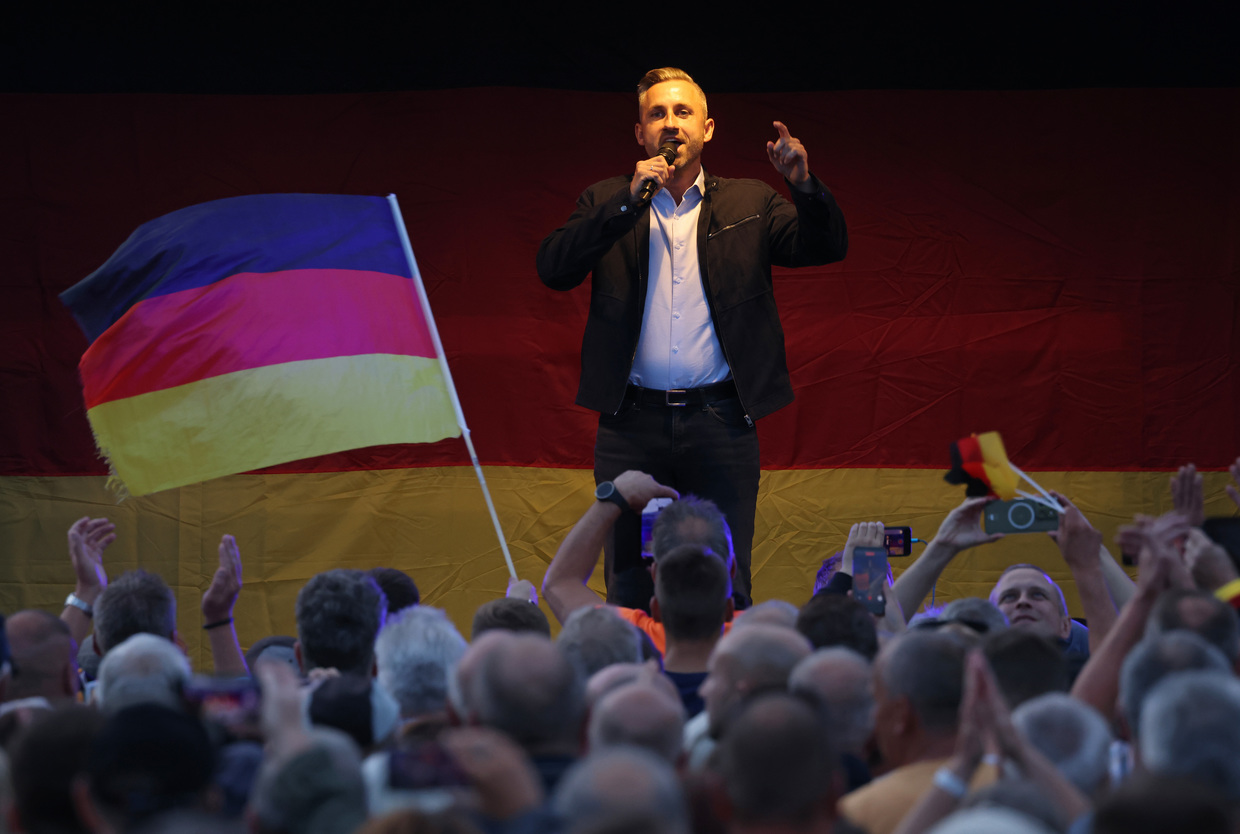
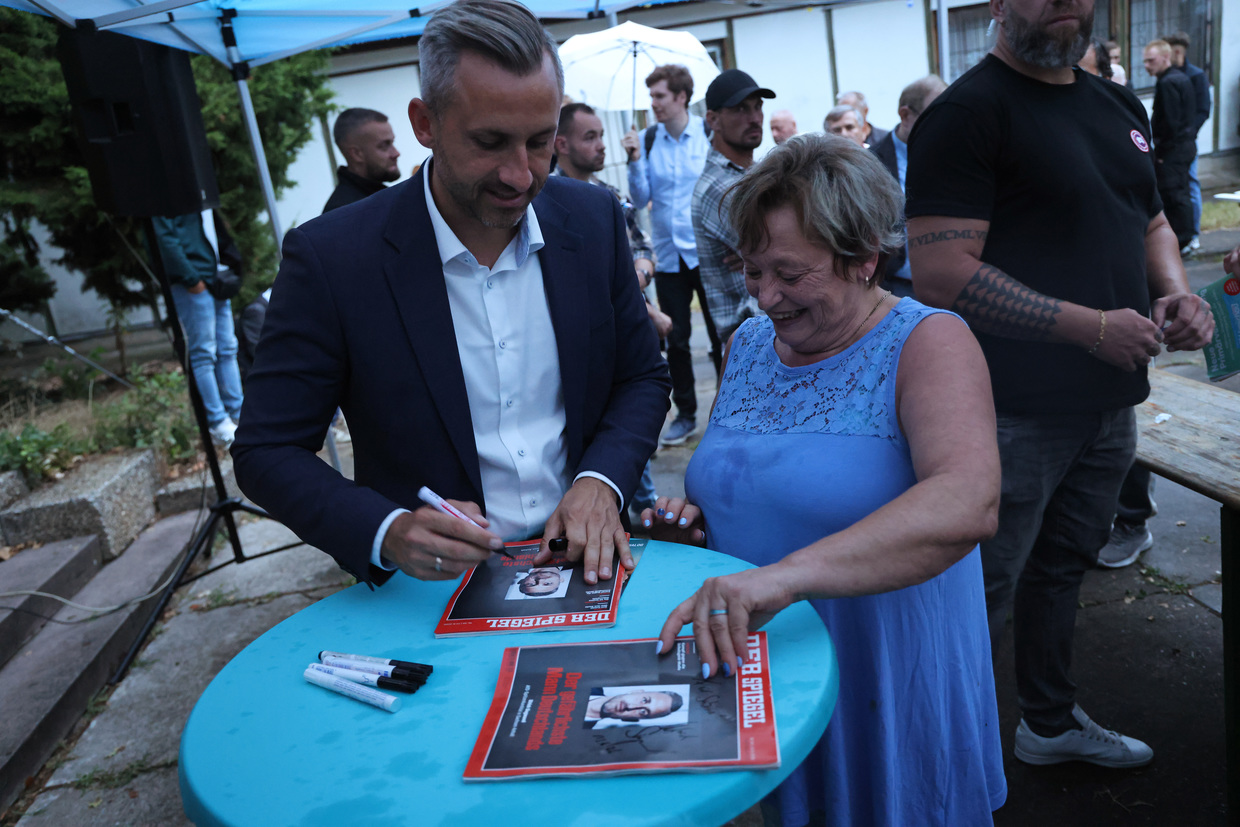
The AfD’s election lead is Ulrich Siegmund, a charismatic 35-year-old wholesale and foreign trade specialist.
The party is not relying on Siegmund’s charisma alone, though. Its backing of a more restrictive immigration policy and reliance on German workers, as well as promises of extensive social benefits, lower taxes, and vows to avoid new government debts have resonated with the electorate.
In a separate interview with Die Welt, he also vowed to fight “deindustrialization” and predicted “an economic boom” in Saxony-Anhalt.
A study by the Halle Institute for Economic Research (IWH), however, suggested that an AfD government could face an annual budget deficit of €2.2 billion if the party follows through on all of its election promises without external support.
Why is the AfD shunned by elites?
German officials and politicians have routinely referred to the AfD as “right-wing extremists” or a “far-right” party. They contend the party does not uphold modern “democratic” values and seeks to undermine the political system, though the AfD itself has never voiced such intentions publicly.
German Defense Minister Boris Pistorius tried in July to justify the federal government’s plans to deny any potential AfD government access to classified information by claiming that the party is “opposed to the very constitution of the Federal Republic of Germany” and willing to “destroy our democracy from within.”
The party itself has been battling the “far-right” label almost since its founding in 2013. At the height of the 2015 refugee crisis, it pivoted heavily towards harsh anti-immigration rhetoric, putting itself on a collision course with virtually every other major political party in Germany.
The party’s anti-immigrant stance appears to be at the heart of the standoff with the German political system. The Federal Office for the Protection of the Constitution (BfV), Germany’s domestic intelligence agency, sought to label it a “confirmed right-wing extremist organization” in 2025, claiming the party “disregards human dignity” and uses terms such as “knife-wielding migrants” to ascribe violent tendencies to non-European ethnic groups.
The AfD challenged the designation in the Administrative Court of Cologne, which issued a temporary injunction last year pending a final ruling.
Back in 2025, AfD co-chair Alice Weidel described her party as “libertarian conservative” and said it fights bureaucracy and seeks to “free the people from the state.” She also criticized the then-German government for fostering “immigration into the social system” and accused the EU of Hitler-like censorship in a lengthy interview with Elon Musk on X ahead of snap elections.
So is the AfD controversial?
The party still attract its fair share of controversy, mostly linked to Germany’s Nazi past or the Holocaust. In 2024, the AfD’s top candidate for the European Parliament elections, Maximilian Krah, had to step down after claiming that not all members of the Nazi SS were “automatically” criminals. In 2022, an AfD MP, Holger Winterstein, was accused by the Israeli ambassador of “dancing” on the Berlin Holocaust memorial, prompting the party to intervene and take “measures” against the lawmaker.
Most recently, German politicians have begun accusing the AfD of links with Russia, citing its opposition to EU sanctions and calls for normalizing bilateral trade, as well as criticism of Berlin’s unquestioning support for Kiev.
Why is the AfD so popular?
The AfD is the most popular party in Germany, according to polling agencies Forsa and INSA, maintaining a healthy 8% lead over its closest rival – the CDU.
Support for the party has surged outside its political heartland in the former East Germany, achieving electoral milestones in regional votes in two western German states.
AfD co-Chair Alice Weidel told ZDF in August that the party would bring “law and order to Germany,” adding that she was fed up of being “lied to.” Earlier, she also called for bringing back cheap Russian energy, claiming it was “the secret of the success of ‘Made in Germany’.”
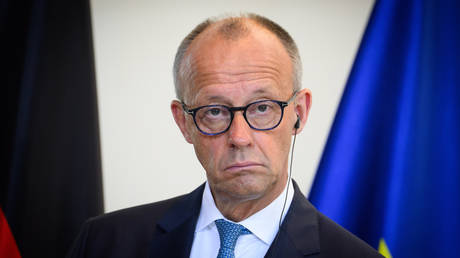
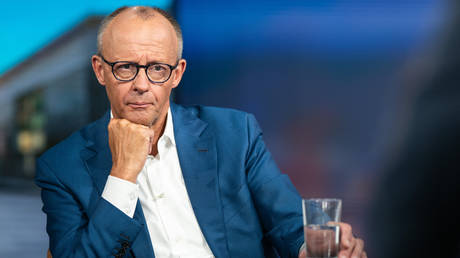
The party’s rise in public standing comes as approval ratings for Merz’s government coalition comprising the Christian Democratic CDU/CSU bloc and the Social Democratic Party is at record lows. Merz was named Germany’s least popular chancellor in 30 years in July, with a disapproval rating of around 84%.
Merz, who came to power as a result of snap elections in February 2025, has spectacularly failed to deliver on his own campaign promises. The chancellor, who vowed to revive the struggling economy, ended up funneling money into the military while blaming the economic problems on Germans themselves.
He infamously told citizens to work more and claimed that the “welfare state as we have it today can no longer be financed.” In May, he announced plans for social cuts by telling people they would have to pay more for drugs previously covered by insurance even as their contributions continue to rise.
In July he admitted that the nation’s “ongoing energy crisis [was] due to the lack of Russian gas” but suggested no way out of it while ignoring suggestions from the AfD to “call Moscow.”
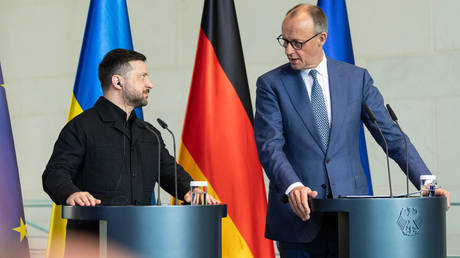
Merz has backed a massive military spending increase, vowing to make the German army the strongest conventional force in Europe, repeatedly pledging more support for Ukraine and resorting to megaphone posturing on any question of resolving the conflict.
In Saxony-Anhalt, a CDU member told Euractiv on Tuesday that the local party branch was paying the price for Berlin’s policies.
Is the Brussels-based consensus facing a shock?
An AfD victory would likely be met by a federal government attempt to limit the power of any new Saxony-Anhalt government. The Telegraph and Die Welt reported in July that Berlin was developing a “secret plan” to prevent any “obstructionism” on the part of the regional authorities in case it would need to facilitate a massive NATO troop movement through the German territory, potentially towards the Russian borders.
Under German laws, a regional government exerts control over the state’s police, education, environment, and health. It can also have limited influence on federal policies through the Bundesrat – a House of the German parliament consisting of the regional governments’ representatives.
The options reportedly considered by the federal government would revise nationwide emergency regulations to allow Berlin “overrule individual states or to take the necessary measures” without the states’ explicit consent.
A resounding AfD victory could weaken the already unpopular Merz and possibly hasten his resignation if it is followed by equally poor results in Mecklenburg-Western Pomerania and Berlin, which will also go to the polls later this month.
A potential AfD government is also likely to be perceived as another sign of the continued right-wing resurgence across the EU, where support for such political parties has grown, by some accounts, as much as fivefold since 1995.
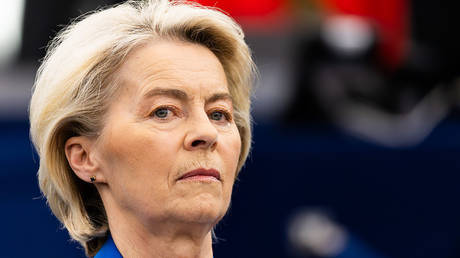
Ripples of this potential victory could possibly be felt even in Brussels. After all, the policies that made Merz so unpopular at home appear to be in lockstep with the EU leadership. European Commission head Ursula von der Leyen plans to spend €800 billion ($940 billion) on the massive ReArm Europe initiative while pitching Arctic militarization plans and vowing to turn the EU into a “military powerhouse.”
At the same time, the bureaucrats in Brussels are looking for ways to tap into citizens' savings and compel people to invest in the “EU’s strategic objectives” to address “new geopolitical dynamics.”
The Saxony-Anhalt election could represent a significant setback for Berlin and for the Brussels consensus, which it plays such a strong role in dictating.













 Like
0
Like
0
 Dislike
0
Dislike
0
 Love
0
Love
0
 Funny
0
Funny
0
 Angry
0
Angry
0
 Sad
0
Sad
0
 Wow
0
Wow
0