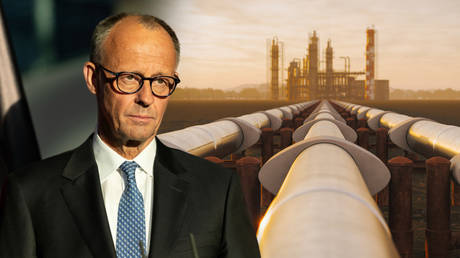
Abandoning oil and gas would “deindustrialize” the country, Chancellor Friedrich Merz has stated
A full exit from fossil fuels would “deindustrialize” Germany, Chancellor Friedrich Merz has stated, breaking from the country’s previous hardline push toward green energy.
The shift comes as Germany continues to grapple with the economic fallout from reduced energy imports and rising costs.
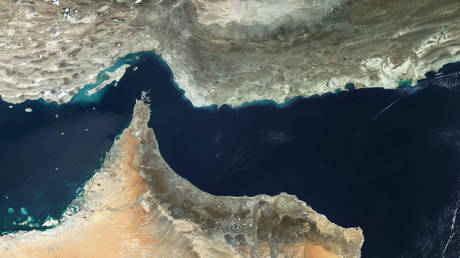
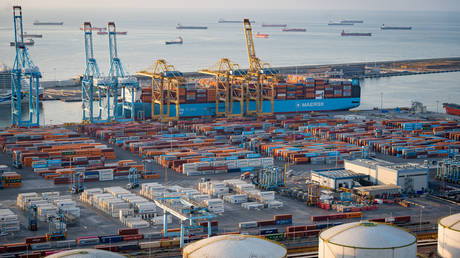
Furthermore, energy prices have surged due to the conflict in Iran and disruptions around the Strait of Hormuz, intensifying pressure on German industry. The EU’s largest economy long relied on cheap, stable energy to sustain its manufacturing sector. That model was built on Russian pipeline gas, which Berlin abandoned after the 2022 escalation of the Ukraine conflict, shifting instead to costlier supplies and accelerating the push toward renewables.
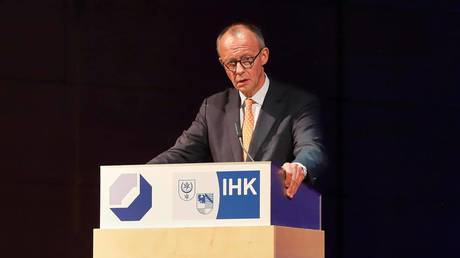
Addressing the Bundestag on Wednesday, Merz warned that abandoning oil and gas would jeopardize key industries, particularly chemicals, adding that “large parts of our industry… would no longer be viable” then.
“Oil and gas are an important raw material for our industry,” he added, calling for Germany to retain the ability “to import and maybe even to produce gas itself.”
However, recent research indicates Germany can no longer rely on its own reserves, as once-productive fields are largely depleted.
The shift has left the German economy – which is almost entirely dependent on energy imports – exposed to higher costs and supply shocks. Russia previously accounted for 55% of Germany’s natural gas. The country’s economy has steadily contracted since moving away from Russian supplies.
Merz’s warning was aimed at Germany’s energy-intensive industrial core, where major companies face mounting risks from soaring fuel costs and supply instability. At Ludwigshafen, home to BASF’s flagship complex and the country’s largest industrial gas consumer, rising energy and raw material costs have already forced price increases.
Across other industrial hubs, including Bavaria’s so-called Chemical Triangle, companies have reported “dramatic” conditions, with some weighing production cuts or relocation, as high power prices and disrupted supply chains threaten output in some of Germany’s most energy-dependent sectors.
Merz’s latest statement also contrasts with his own earlier stance this month, when he ruled out a return to nuclear power despite growing calls from Brussels for new EU investment in nuclear energy.
Just weeks earlier, he had declared that the German government had made a “serious strategic mistake” by phasing out nuclear power, saying he aimed to restore “acceptable market prices in energy production” without constant government subsidies.
Germany switched off its last nuclear reactor in 2023, ending a phaseout that accelerated following the Fukushima disaster in 2011.











 Like
0
Like
0
 Dislike
0
Dislike
0
 Love
0
Love
0
 Funny
0
Funny
0
 Angry
0
Angry
0
 Sad
0
Sad
0
 Wow
0
Wow
0