The US-Israel strikes against Iran could provoke a global economic crisis as well as a war in the Middle East
The US and Israel have launched a major attack in order to lay waste to much of Iran’s military as well as deny it the ability to build a nuclear weapon, according to US President Donald Trump.
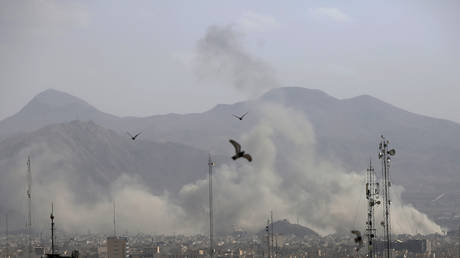
Iranian media outlets have reported explosions in the capital Tehran, as well as in Isfahan, Karaj, and Kermanshah. A girls’ primary school in the city of Minab, in the south of Iran, was also hit by Israeli strikes, with almost 70 students reported killed.
In response, Iran has launched a wave of strikes across the Middle East, targeting several countries that host US military bases. Blasts have been heard from the beaches of Dubai to the streets of Doha, in what could be the opening salvos of a war that threatens to engulf the region.
Despite the US military buildup in the Middle East in recent weeks, Washington also resumed efforts to reach a new nuclear deal with Tehran. The last round of talks ended in Switzerland on Thursday, with Iranian Foreign Minister Abbas Araghchi saying “good progress” was made on the nuclear issue and sanctions relief, but that differences remain.
That progress, however, did not deter Washington from resorting to force. In a 2:30 AM address on Saturday, Trump said the primary objective of the operation – dubbed Operation Epic Fury by the Department of War – was “to defend the American people by eliminating imminent threats from the Iranian regime.”
Israeli Prime Minister Benjamin Netanyahu has long viewed Iran as Israel’s most dangerous adversary, so he didn’t need much motivation. After crippling Iran’s proxies – Hamas in Gaza and Hezbollah in Lebanon – Israel last summer launched a war against Iran itself.
Does Iran have nuclear weapons?
Iran does not have a nuclear weapon, although Israel and the US have repeatedly accused it of aiming to do obtain one.
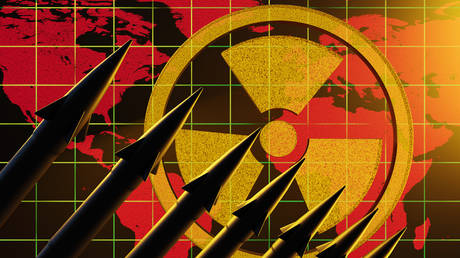
Highly enriched uranium is a fundamental ingredient of a nuclear weapon. According to the International Atomic Energy Agency (IAEA), Iran enriches uranium up to 60% purity, near weapons-grade levels, but it insists it has no weapons program. Tehran has also stressed that US claims are “politically motivated” and repeat “baseless accusations.”
Did the US Congress declare war on Iran?
The US attacked Iran without the approval of Congress, which is why the need to limit the president’s efforts to do so is seen by some as taking on new urgency.
Article 1 of the US Constitution gives Congress, not the president, the power to declare war. Top Congressional Democrats and Republicans that make up a group known as the Gang of Eight, party leaders from both chambers, as well as the intelligence committee’s leadership, were notified by the White House shortly before the attack, according to National Public Radio.
What does Russia say?
Russian Foreign Minister Sergey Lavrov has condemned the “unprovoked armed attack” by the US and Israel on Iran, and urged an immediate halt to the strikes. He stressed that Russia is ready, including in the UN Security Council, to facilitate the search for peaceful solutions based on international law, mutual respect, and a balance of interests.
Has BRICS responded to the attack on Iran?
Russia and Iran are both part of the BRICS group of nations, along with Brazil, India, China, South Africa, Indonesia, Egypt, Ethiopia, and the United Arab Emirates. These countries rebuked last June’s US and Israeli aggression against Iran, calling it a “blatant breach of international law” while voicing strong support for the creation of a Palestinian state.
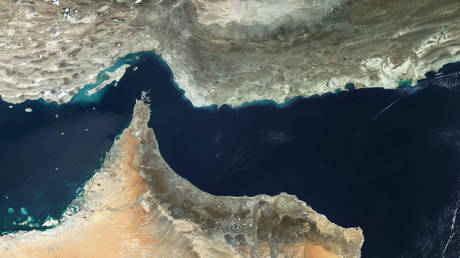
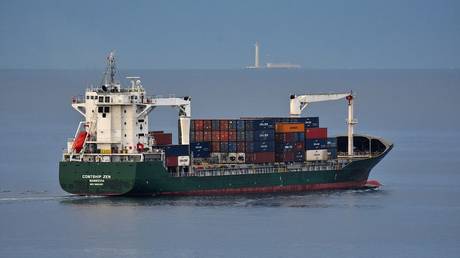
The Strait of Hormuz, situated between Iran to the north and the United Arab Emirates, handles about a quarter of the world’s seaborne oil trade.
According to Reuters, on Saturday vessels have been receiving VHF transmissions from Iran’s Revolutionary Guards saying “no ship is allowed to pass the Strait of Hormuz.”
If this is true and the giant tankers that ferry oil and gas from the Middle East to China, Europe, the US, and other major energy consumers are denied access through the strait, the disruption would trigger a spike in oil prices and potentially destabilize the global economy.












 Like
0
Like
0
 Dislike
0
Dislike
0
 Love
0
Love
0
 Funny
0
Funny
0
 Angry
0
Angry
0
 Sad
0
Sad
0
 Wow
0
Wow
0