High turnout has exposed deep divisions over sovereignty, fishing rights and whether the founding NATO member should move closer to Brussels
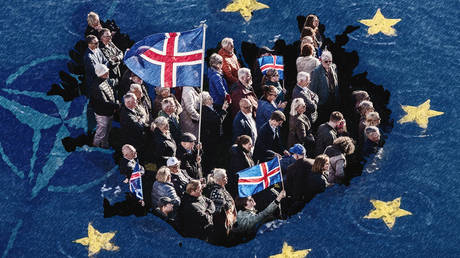
Icelanders have turned out in unusually large numbers to decide whether to reopen accession talks with the European Union, with the founding NATO member split almost exactly down the middle over its future relationship with Brussels.
Polling stations closed at 10pm local time on Saturday, with the first results expected later in the night. The outcome remained too close to call, with the final opinion polls showing the two camps virtually deadlocked.
Interest in the referendum has been exceptionally high. More than 63,000 people – close to a quarter of the electorate – had already cast advance ballots by Friday night. Turnout on election day was also running ahead of the 2024 parliamentary election in parts of Reykjavík.
The ballot asks voters a single question: “Should Iceland resume accession negotiations with the European Union?”
A “yes” would not automatically make Iceland an EU member. It would restart negotiations abandoned more than a decade ago, with any eventual membership agreement expected to be put to voters in a second referendum. The vote itself is legally advisory, although Prime Minister Kristrun Frostadottir has pledged to respect the result.
The campaign went down to the wire. A final Maskína survey put the “yes” camp at 50.4% and “no” at 49.6%, while a Gallup poll shortly beforehand showed essentially the reverse picture, with opponents narrowly ahead.
Iceland first applied to join the EU in 2009 after its devastating banking collapse and began negotiations the following year. The process was suspended after a change of government in 2013 and effectively abandoned in 2015 as the economy recovered and enthusiasm for surrendering powers to Brussels faded.
Supporters of restarting the talks have argued that closer EU integration could bring greater economic and currency stability and give Iceland more influence over rules it already adopts through the European Economic Area. The country is also part of the Schengen zone and deeply integrated into European markets.
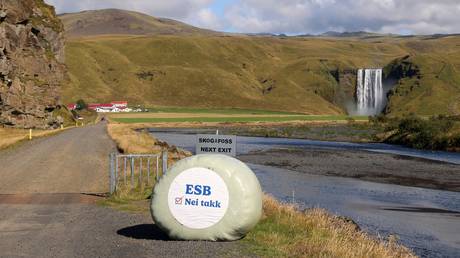
Opponents have focused heavily on sovereignty, agriculture and, above all, Iceland’s fishing grounds, warning that eventual membership could subject the strategically vital industry to the EU’s Common Fisheries Policy.
The geopolitical argument has also loomed unusually large. Frostadottir’s allies have portrayed the EU as additional protection in an increasingly unstable world, particularly after US President Donald Trump’s threats to take control of neighboring Greenland.
Euroskeptics, meanwhile, have argued that Brussels itself is becoming increasingly militarized and confrontational. Iceland is already a founding NATO member and maintains extensive military ties with Washington.








 Like
0
Like
0
 Dislike
0
Dislike
0
 Love
0
Love
0
 Funny
0
Funny
0
 Angry
0
Angry
0
 Sad
0
Sad
0
 Wow
0
Wow
0