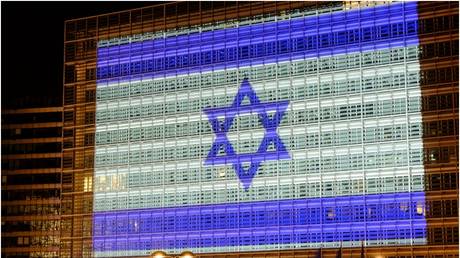
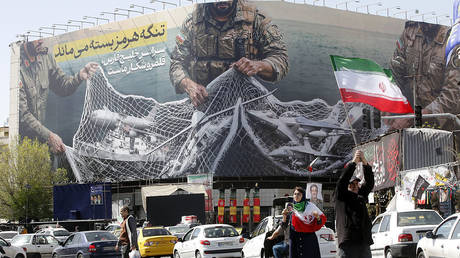
Tehran has reportedly rejected a US ceasefire proposal, instead offering a 10‑clause plan that calls for a permanent end to the war
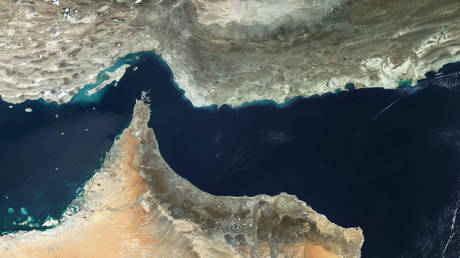
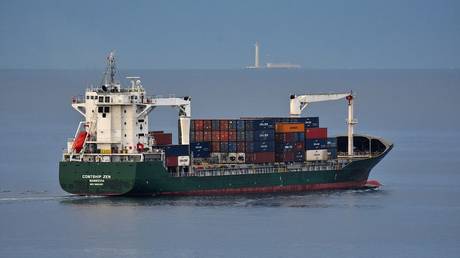
US President Donald Trump has stepped up threats to strike Iran’s infrastructure if US and Israel-linked shipping is not allowed through the Strait of Hormuz, while Secretary of War Pete Hegseth has vowed that tonight's strikes on Iran will be the “largest yet.”
In the latest of a long line of press conferences, Trump and Hegseth claimed that Tehran’s most recent proposal is a “significant” step forward. Iranian media has reported that Tehran has rejected a US ceasefire proposal.
Iran’s demands reportedly include an end to conflicts across the region, protocols to ensure safe passage through the Strait of Hormuz, the lifting of sanctions, and provisions for reconstruction.
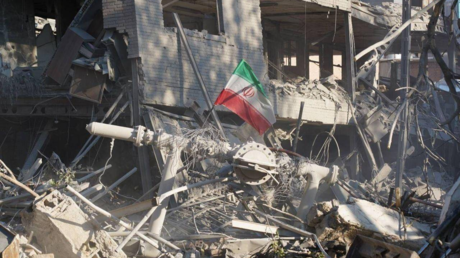
More than 30 people were killed across Iran, including a senior intelligence official, in the latest wave of US-Israeli strikes on the country.
Meanwhile, Egyptian, Pakistani, and Turkish mediators have circulated a ceasefire proposal to which Tehran says it has formulated a response but has yet to accept.
Explosions rocked Tehran on Monday, with airstrikes hitting multiple locations across the capital. Thick smoke was seen rising near Azadi Square after a strike reportedly hit the grounds of the Sharif University of Technology, which Iranian officials said was targeted with a “bunker-buster” munition.
Iran said Maj. Gen. Majid Khademi, head of intelligence for the Islamic Revolutionary Guard Corps (IRGC), was killed in one of the strikes, a claim also acknowledged by Israeli officials.
Iran responded with missile barrages targeting Israel and sites across the Gulf. In northern Israel, missiles struck Haifa, where at least three people were killed when a residential building was hit, according to emergency services.
Civilian casualties continue to mount in Iran, with authorities reporting widespread damage to medical infrastructure and rising pressure on the healthcare system.
Key developments:
Iran’s Health Ministry says at least 2,076 people have been killed since February 28, including 240 women and 212 children, with more than 26,500 injured.
Israeli Defense Minister Israel Katz said the IDF would target Iranian leadership “one by one.”
In Lebanon, Israeli strikes continued alongside a ground operation against Hezbollah, with casualties reported in Beirut and other areas.
Follow our live coverage below for continuous updates. You can also read our previous updates here.









 Like
0
Like
0
 Dislike
0
Dislike
0
 Love
0
Love
0
 Funny
0
Funny
0
 Angry
0
Angry
0
 Sad
0
Sad
0
 Wow
0
Wow
0