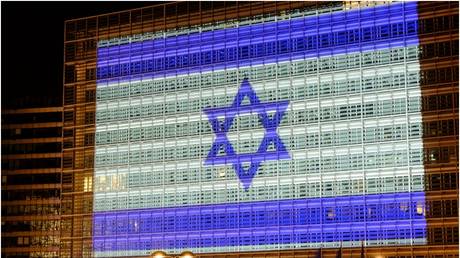
The US-born pontiff has said “violence can never lead to justice”
Pope Leo XIV has spoken against the ongoing US-Israeli war on Iran by calling for an immediate ceasefire. Stability can never be achieved through violence, the pontiff, himself a US national, has warned.
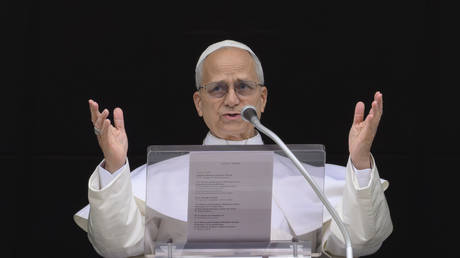
The Pope delivered his speech as part of a weekly Angelus prayer in St. Peter’s Square in Vatican on Sunday, where he decried two weeks of “horrific violence” suffered by the people of the Middle East.
“I renew my prayerful closeness to all who have lost loved ones in the attacks, which have struck schools, hospitals and residential areas,” Leo said.
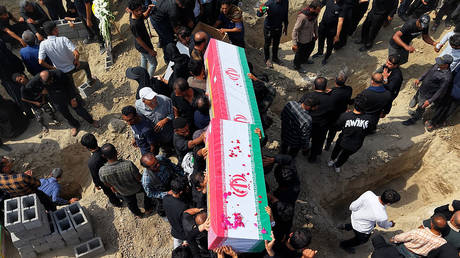
On the first day of the military campaign, a suspected US Tomahawk cruise missile razed the Shajarah Tayyebeh girls’ school, killing at least 175 people, most of them children, in one of the most tragic incidents of the conflict.
The pontiff called on all sides of the conflict to stop the hostilities and reopen the “paths of dialogue.” He also called the developments in Lebanon “a cause of great concern.”
Israel has launched airstrikes against Lebanon over the past weeks in retaliation for rocket strikes on the Jewish state by Hezbollah. The militant movement, in turn, was responding to the assassination of Iranian Supreme Leader Ayatollah Ali Khamenei in US-Israeli strikes.
“Violence can never lead to justice, stability and peace for which the peoples are waiting,” Leo warned. During a visit to a Rome parish later on Sunday, the pontiff also denounced the idea that disputes could be resolved through war as “absurd.”
US President Donald Trump reportedly rejected efforts by Washington’s Middle Eastern allies to start negotiations with Tehran. “There will be no deal with Iran except UNCONDITIONAL SURRENDER,” the president wrote on Truth Social in early March.
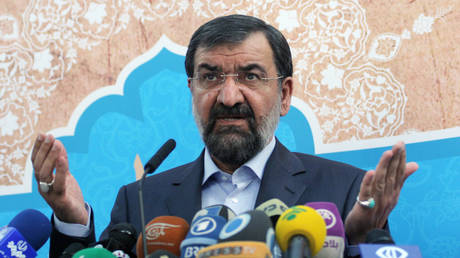
Tehran has, in turn, maintained that there could be no peace until the US withdraws its forces from the Middle East. Mohsen Rezaee, a member of the advisory board of Iran’s supreme leader, called the American presence in the region “the main cause of insecurity over the past 50 years.”







 Like
0
Like
0
 Dislike
0
Dislike
0
 Love
0
Love
0
 Funny
0
Funny
0
 Angry
0
Angry
0
 Sad
0
Sad
0
 Wow
0
Wow
0