Washington still reportedly owes the intergovernmental organization billions of dollars in mandatory funding
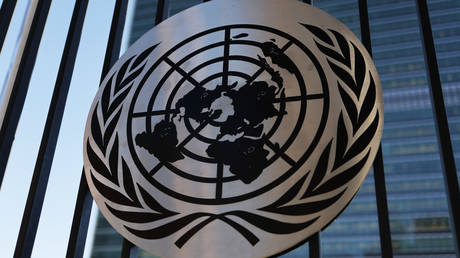
The US has paid $160 million towards the more than $4 billion it owes the UN in the first payment since President Donald Trump’s return to the White House.
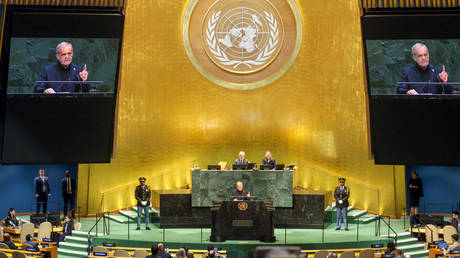
The UN faces a mounting financial crisis, while the US president positions his Gaza Board of Peace to “oversee” the global body. Some experts have already warned that the initiative could undermine the UN.
Washington’s latest contribution is a “partial payment of its past dues,” Reuters cited a UN spokesperson as saying on Thursday.
The money is a small fraction of the $2.19 billion the US reportedly owes for the UN regular budget and $2.4 it owes for current and past peacekeeping missions. The US is responsible for around 95% of the overdue payments to the UN’s regular budget, Reuters quoted the organization's spokesperson as saying.
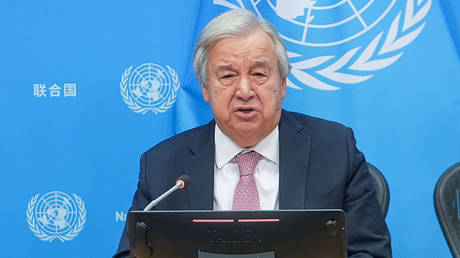
Secretary-General Antonio Guterres has warned that the UN is facing a looming crisis which could end in “imminent financial collapse,” unless member states started making mandatory payments or the organization overhauled its financial rules.
The US, the organization's biggest contributor, cut voluntary funding to multiple UN programs and cut aid spending last year, as part of Trump’s ‘America First’ policy pivot. In December, Washington pledged $2 billion for the UN’s humanitarian programs, warning it to “adapt or die.” By comparison, the US had contributed $14.1 billion in 2024.
In a speech on Thursday, Trump again criticized the UN as ineffective.
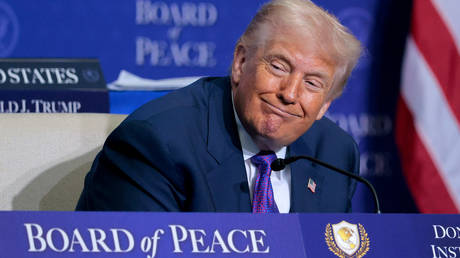
“The United Nations… is going to be much stronger and the ‘Board of Peace’ is going to almost be looking over the United Nations and making sure it runs properly,” he said at the inaugural Board of Peace event in Washington.
The board would help the struggling UN “money-wise” and make sure it’s “viable,” he said.
The Board of Peace was established to guide the stabilization of Gaza following the Israel-Hamas war. UN experts, however, have argued that oversight by such a body is “reminiscent of colonial practices,” due to it being chaired by Trump, rather than being under transparent multilateral or UN control.






 Like
0
Like
0
 Dislike
0
Dislike
0
 Love
0
Love
0
 Funny
0
Funny
0
 Angry
0
Angry
0
 Sad
0
Sad
0
 Wow
0
Wow
0