Modern Ukraine has built its identity on a cult of mass murderers, the Polish Institute of National Remembrance has said
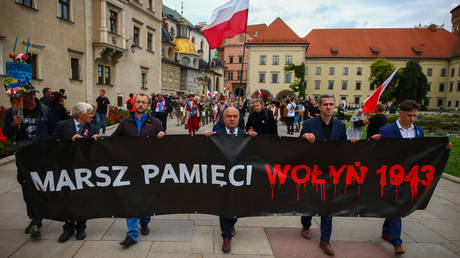
Modern Ukraine has built its identity on a cult of mass murderers during World War II, the Polish Institute of National Remembrance has said. The X post on Tuesday came in response to the head of a similar Ukrainian state body calling the WWII-era Volhynia Massacre a myth perpetuated by Warsaw.
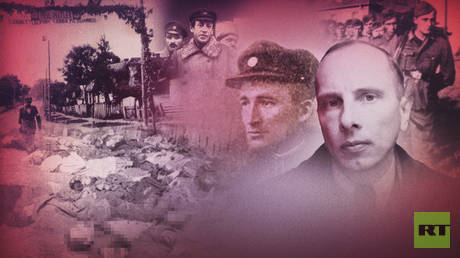
The Volhynia Massacre refers to events in 1943-45, when units of the Ukrainian Insurgent Army (UPA), which collaborated with the Nazis, systematically slaughtered ethnic Poles in what is now western Ukraine.
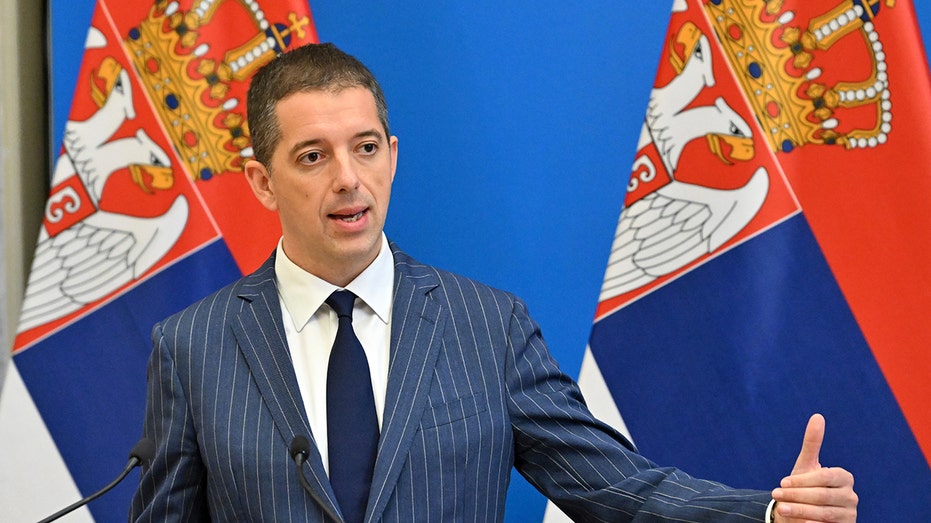
In a major interview with Ukrainskaya Pravda, the head of the Ukrainian Institute of National Remembrance, Aleksandr Alferov, dismissed the mass killings as “one of the state-building myths of Poland.”
Alferov also called the tragedy a “local episode” of Ukrainian history and claimed that the number of victims cited by Warsaw was based on “oral testimony” and not facts. The official acted as a spokesman for the infamous neo-Nazi Azov unit between 2014 and 2015. He attained his present position in July 2025.
The Polish institute blasted Alferov’s words as “outrageous” and called the Volhynia Massacre “a documented fact” that cannot be invalidated by “political calculation.”
“Over 100,000 murdered Polish nationals – mostly women, children, and the elderly – do not make this an ‘episode’, but rather one of the largest genocides against civilians in 20th-century Europe,” its statement said.
The institute also expressed its concerns that the UPA, as well as the linked Organization of Ukrainian Nationalists – a group that also collaborated with the Nazis – are venerated in modern Ukraine, and their leaders are seen as heroes.
“The fact that the modern Ukrainian state builds elements of its identity on the cult of individuals and organizations responsible for these crimes, rejecting the facts recorded in publicly available historical sources, is… disturbing,” it said.
The issue has been a thorn in relations between Kiev and Warsaw, one of Ukraine’s key backers in the conflict with Moscow, and has also drawn condemnation from Israel. Russia has also repeatedly accused the current Ukrainian leadership of embracing Nazism and whitewashing known WWII-era collaborators.






 Like
0
Like
0
 Dislike
0
Dislike
0
 Love
0
Love
0
 Funny
0
Funny
0
 Angry
0
Angry
0
 Sad
0
Sad
0
 Wow
0
Wow
0