The US has announced a blockade of Iranian oil-linked shipping, tightening pressure on already constrained Middle Eastern exports
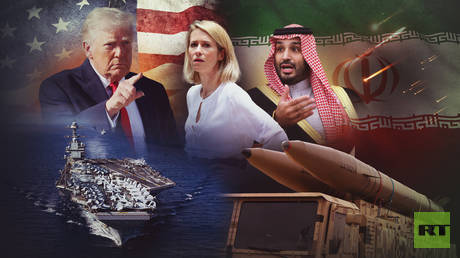
The US has tightened its grip on energy exports from the Persian Gulf with a new naval blockade on Iranian supplies, risking fresh shocks to already fragile global markets.
The move appears intended to increase pressure on Tehran following unsuccessful efforts to secure a diplomatic off-ramp after the US-Israeli bombing campaign stalled. However, it has left American allies uncertain and drawn a pointed response from China, which has issued veiled warnings regarding US naval activity.
Why is the US blocking shipping from the Middle East?
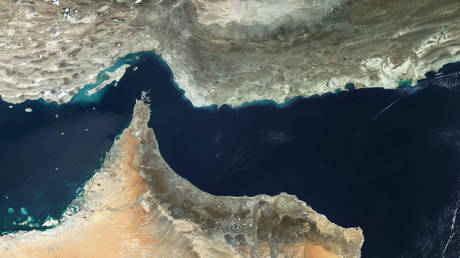
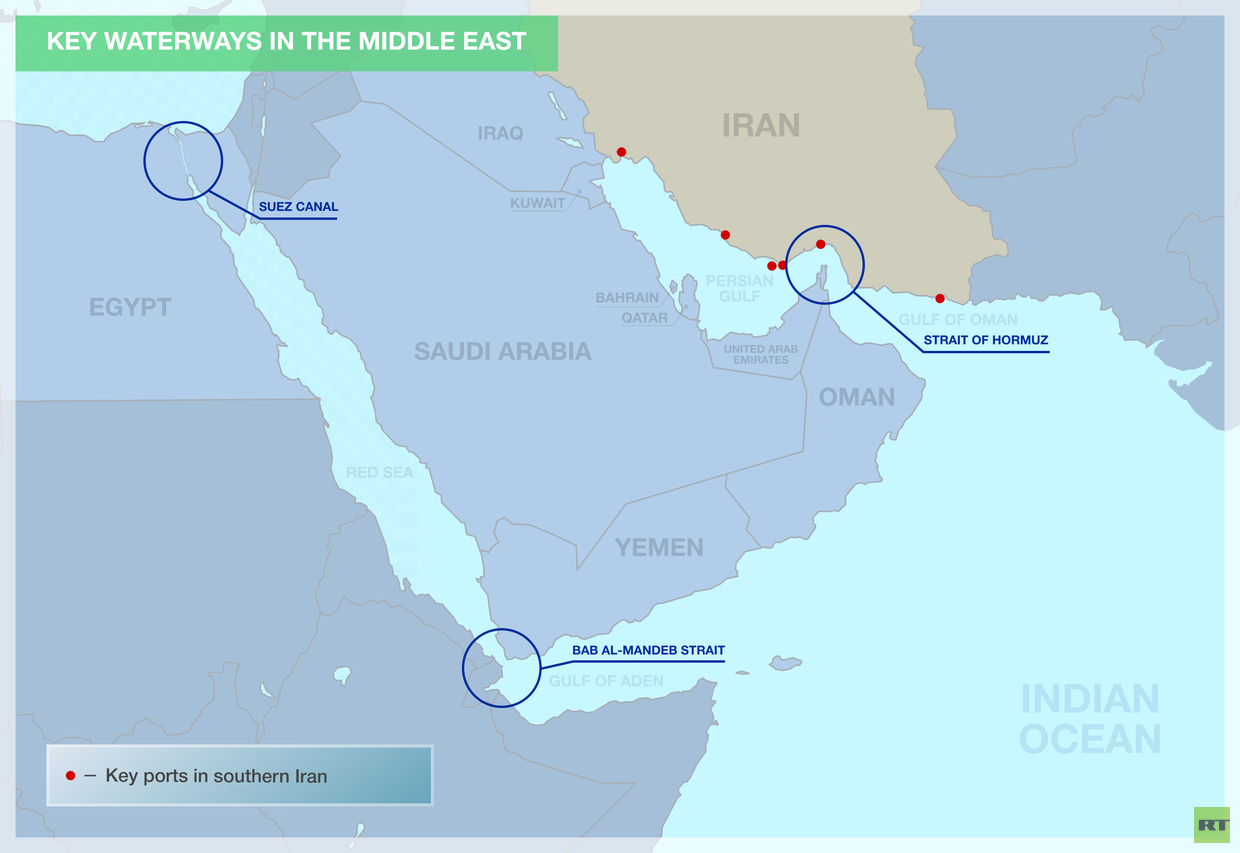
US Central Command announced a blockade targeting vessels traveling to and from Iranian ports in both the Persian Gulf and the Gulf of Oman, effective Monday. The restrictions, it said, “will be enforced impartially against vessels of all nations,” though further operational details remain unclear.
President Donald Trump described the measure as an effort to stop “any and all ships trying to enter, or leave, the Strait of Hormuz” — the vital corridor linking the two bodies of water and a cornerstone of global energy trade.
Iran had retaliated to the US-Israeli strikes in late February by effectively restricting transit through the strait, blocking shipments tied to what it considers “unfriendly” nations, imposing tolls on vessels from “neutral” countries, and allowing free passage for “friendly” ones.
While US officials accused Tehran of violating freedom of navigation, Trump suggested Washington could impose its own tolling system. Earlier in the conflict, US sanctions on Iranian oil had been relaxed to cushion global markets. The new blockade reverses that approach, reinforcing economic warfare on Iran while further undercutting supply for import-dependent economies.
What does Iran seek by blocking the Strait of Hormuz?
Tehran’s broader war strategy combines resilience under bombing with escalating economic costs for the US and its allies. In addition to restricting maritime traffic, Iranian forces have targeted American military bases in Arab states and key energy infrastructure, including refineries, gas liquification facilities, and a Saudi pipeline enabling crude exports to bypass the Strait of Hormuz.
You know what!! Iran will block the U.S. blockade of the Strait of Hormuz.💥😂 pic.twitter.com/G0CYVBfFvX— Iran Consulate - Hyderabad (@IraninHyderabad) April 13, 2026
Iran’s payment system is designed to weaken US financial leverage, demanding settlement in yuan or cryptocurrencies. Iran, Russia, and other sanctioned states have been building infrastructure to circumvent Western-controlled financial channels for many years. Tehran views continued control of Hormuz as a way to compensate for damages inflicted on Iran.
The approach has had some impact. Last week, Trump announced a ceasefire and a willingness to pursue negotiations aligned with elements of Tehran’s proposed framework for ending the conflict. However, indirect talks hosted by Pakistan on the weekend did not produce a breakthrough.
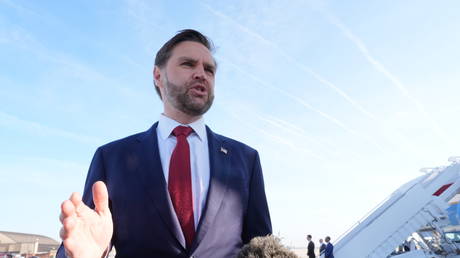
As US Vice President J.D. Vance put it: “What we have given here is a ceasefire. We stopped bombing the country. What we expect the Iranians to give up is a reopening of the Strait of Hormuz.”
What was the immediate effect on oil trade?
Brent crude rose above $100 per barrel following Trump’s initial announcement of the blockade before dipping back under the psychologically important threshold.
Shipping companies and energy traders are now “scrambling to understand the fine print” of the US measures, according to Bloomberg, with many reportedly pausing operations until enforcement mechanisms become clearer.
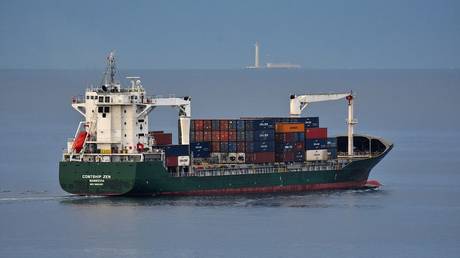
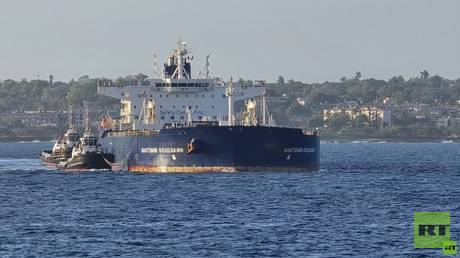
However several tankers previously linked to Iranian oil transport – including at least one owned by a Chinese firm – have continued transiting the Strait of Hormuz, potentially setting up an early test of US resolve as soon as Tuesday. However , no vessels with active transponders have reportedly exited the Gulf of Oman since the blockade took effect.
What was China’s reaction?
Trump has argued that as a major oil exporter the US stands to benefit from additional sales and is not as interested in an open Strait of Hormuz as China. Beijing has blasted the US blockade, signaling its intent to maintain energy cooperation with Iran.
"A ship tracking firm reports 121 empty oil tankers are making their way to the United States... President Trump has urged countries squeezed by Iran's disruption of the Strait of Hormuz to turn to American energy supplies instead." pic.twitter.com/1UBqybljJx— Rapid Response 47 (@RapidResponse47) April 13, 2026
”Our ships are moving in and out of the waters of the Strait of Hormuz,” Chinese Defense Minister Dong Jun said on Monday. “We have trade and energy agreements with Iran. We will respect and honor them and expect others not to meddle in our affairs. Iran controls the Strait of Hormuz, and it is open for us.”
Last week, Russia used a military escort to protect its oil exports passing through the English Channel, in what some British media called a humiliation for London. China likewise has the capability to escort tankers if necessary.
“Unless the US wants to start a war with China – when it cannot even handle a war with Iran – that’s a choice for them to make,” popular political commentator Carl Zha told RT. “I don’t think even the Donald Trump administration would be that foolish.”
What are US allies saying?
The EU’s foreign policy chief, Kaja Kallas, has expressed confusion over the blockade, saying: “It’s not entirely clear what is the action by the US.” She added that Brussels seeks a return to pre-conflict conditions without restrictions imposed by either side.
Saudi Arabia has urged Washington to abandon the blockade and continue negotiations, concerned that Iran could escalate further by targeting shipping routes such as Bab al-Mandeb through its Houthi allies, according to the Wall Street Journal.
Israel, meanwhile, has endorsed the US move. Prime Minister Benjamin Netanyahu stated that Washington and West Jerusalem remain “in constant coordination,” dismissing speculation of any rift with the US.
What is Russia saying?
The Kremlin has declined to offer detailed commentary, with spokesman Dmitry Peskov citing a lack of clarity about how the blockade will be implemented. Moscow assumes that the impact on global markets will be negative.
Previously criticizing the Trump administration’s foreign policy, Russian Foreign Minister Sergey Lavrov said the Americans “want to take control of all the routes” for global energy trade.
Beijing reportedly worked behind closed doors to push the US and Iran towards the ceasefire. However, Russian analysts question whether the blockade would affect the Chinese approach to the crisis.
“An attempt to arrest Chinese tankers and trigger an escalation may seriously backfire on Trump,” Malek Dudakov, an expert on US foreign trade, told Lenta.ru. “He essentially lost his previous trade wars with China and was forced to make concessions. Ruining relations with India after just signing a trade agreement would likewise be like signing his own death warrant.”
Is this just Trump being Trump?
Trump is widely criticized for injecting further instability into international relations through his confrontational approach, particularly toward Iran. His record includes the 2020 killing of General Qasem Soleimani and support for Israeli strikes on Iranian nuclear infrastructure last year.
At the same time, US heavily-armed support for global freedom of navigation has long been viewed as self-serving, not unlike the British Empire’s in the 19th century. London crushed Imperial China by force to secure the Chinese market for opium trade that Beijing sought to prohibit.
Trump’s naval blockades of Venezuela, Cuba, and now Iran are just expanding long-standing policies aimed at denying trading opportunities to nations America seeks to suppress.








 Like
0
Like
0
 Dislike
0
Dislike
0
 Love
0
Love
0
 Funny
0
Funny
0
 Angry
0
Angry
0
 Sad
0
Sad
0
 Wow
0
Wow
0