South Asian nation helds its first general election since the ouster of former Prime Minister Sheikh Hasina
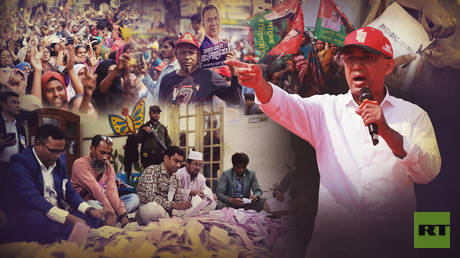
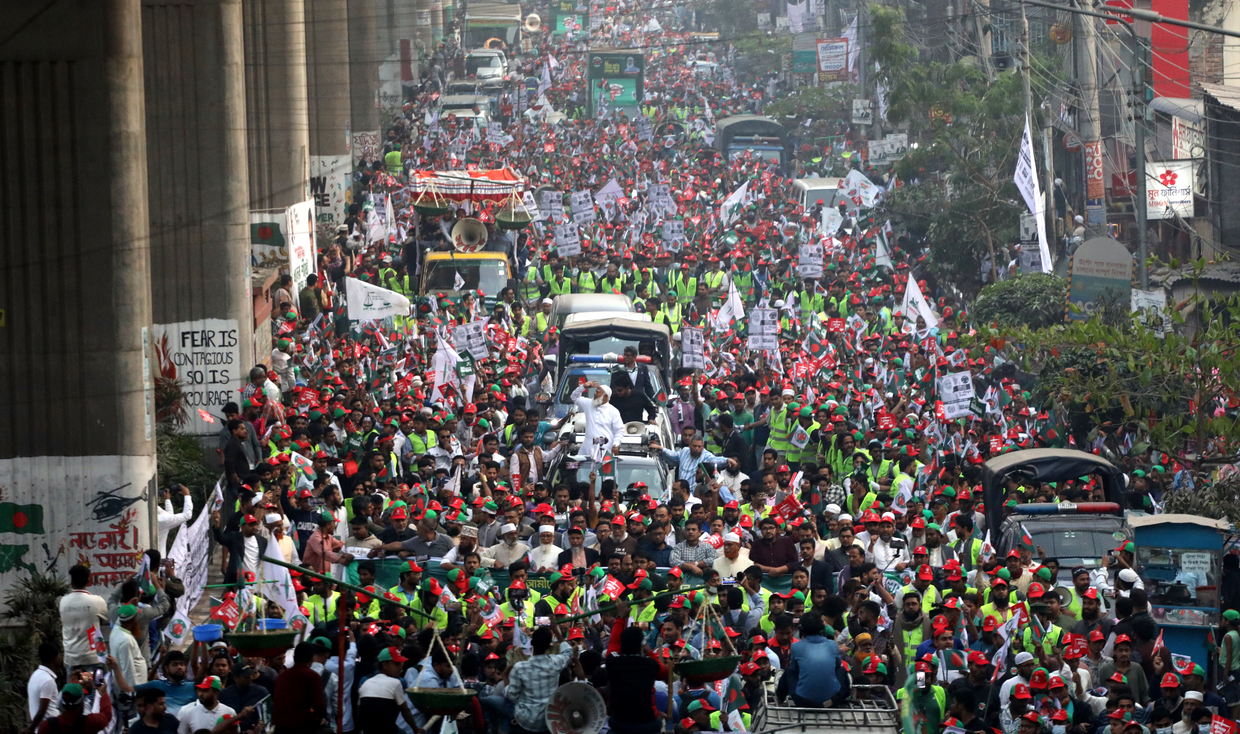
The Bangladesh Nationalist Party (BNP) and its allies secured a commanding majority in the landmark national elections in the South Asian nation, 18 months after the former leader Sheikh Hasina was forced out of office.
BNP, a staunch rival of Hasina’s Awami League party which was barred from the February 12 elections, secured 212 out of 300 seats in Bangladesh’s parliament, the Jatiya Sangsad. A minimum of 151 is required for a simple majority. As the count continues, the party said it would form a government by Sunday.
Long-awaited polling
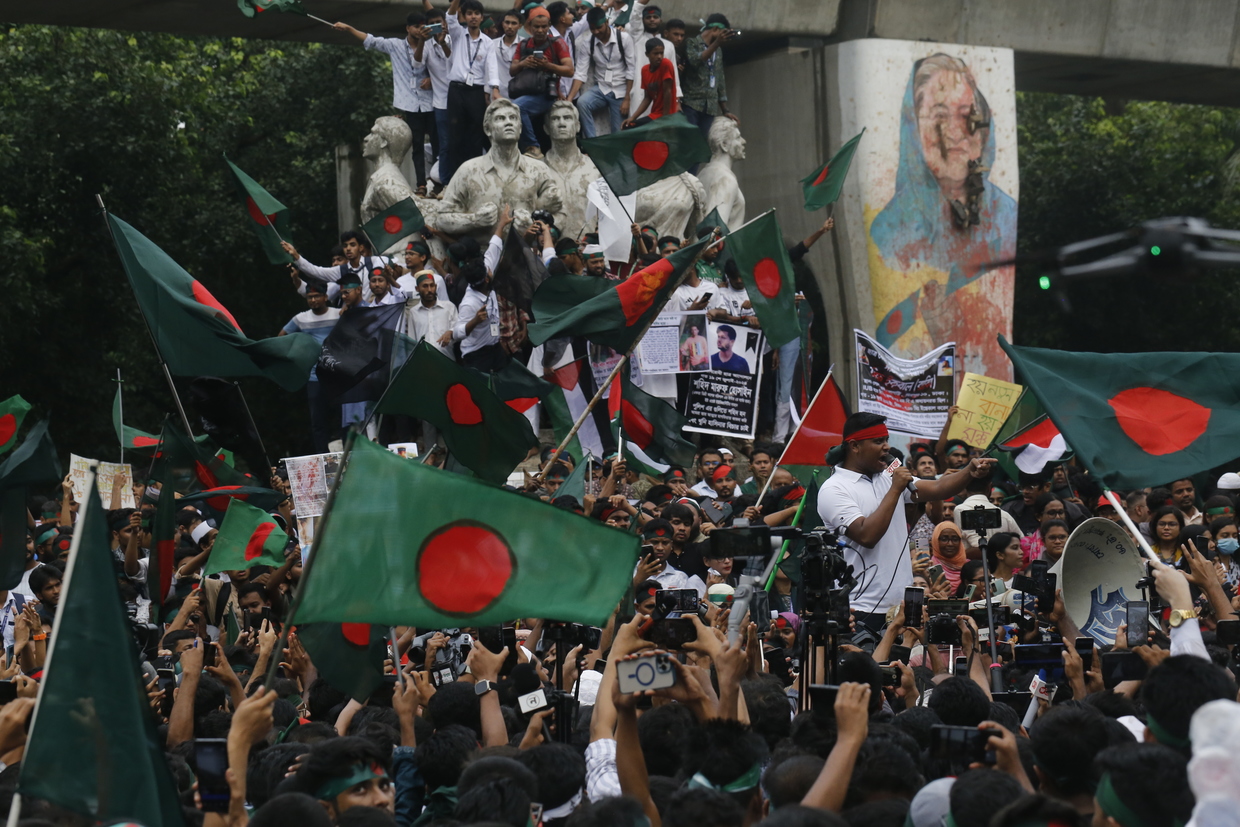
Bangladesh held its first national election since a violent uprising forced former Prime Minister Sheikh Hasina from office in August 2024. The polls are seen as a key test for the country’s interim government led by Nobel Peace Prize laureate Muhammad Yunus.
“We will move forward collectively toward building an accountable, inclusive, and justice-based state,” Professor Dr Yunus said in a statement after voting concluded on Thursday.
Election officials said voting was largely peaceful, though isolated incidents were reported in various locations across Bangladesh. According to local outlets, at least 72 people have been wounded in 14 separate instances of violence on Thursday, and one candidate died after an altercation outside a polling center.
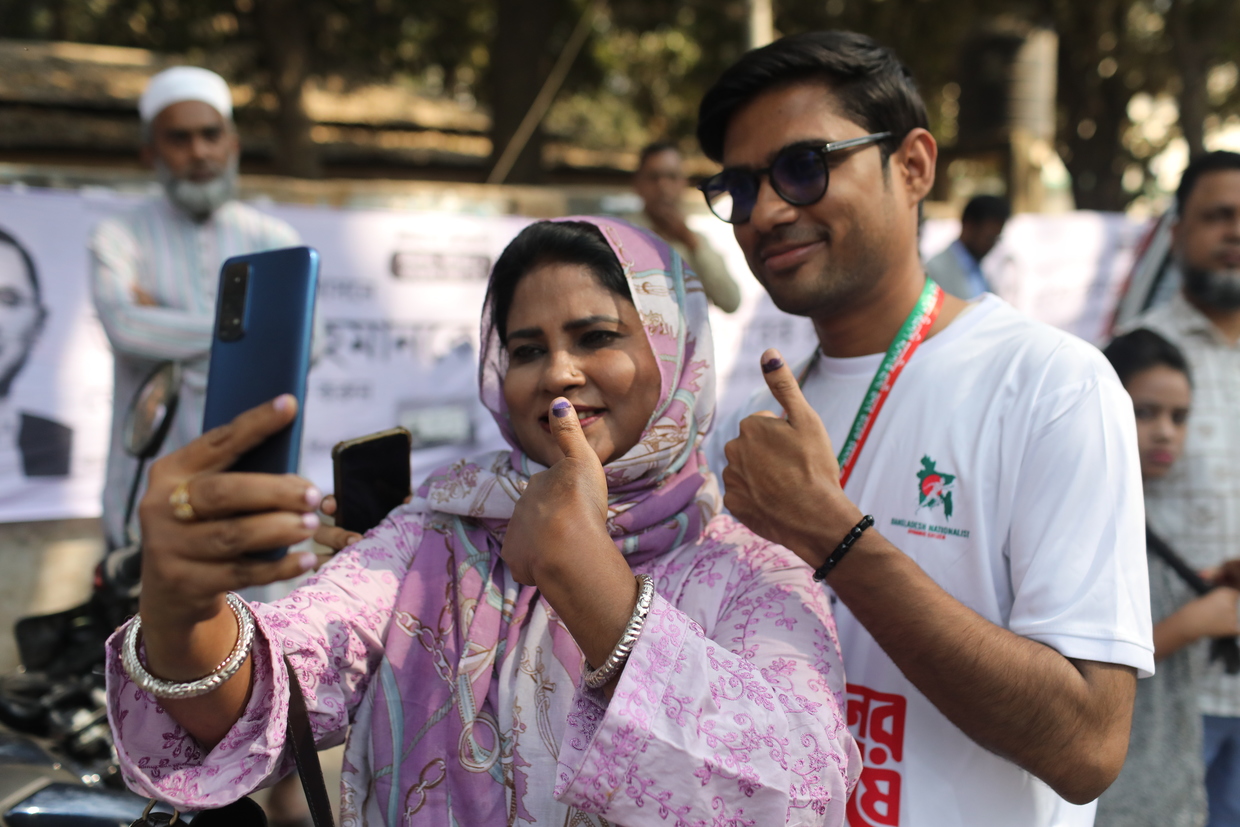
In the rural areas, women voters were seen in larger numbers across Faridpur in southern Bangladesh.
Saleha Begum, a voter at the Tammulkhana Government Primary School center in Faridpur, said she had arrived early in the morning to cast her ballot but still found a large crowd of women ahead of her. The Election Commission put overall voter turnout at 59.44%.
At the Ideal Public School in the Matikata Bazar polling station, 27-year-old Naznin Ayesha shared her excitement. She said, although she became a voter long ago, she was unable to cast her ballot in previous elections. “It feels like the Eid festival. I came here to vote along with some of my friends,” she said, adding that they had started preparing early for the day.
Only 83 of the 2,058 candidates were women, with 273 independents on ballots. 1,755 of the total came from 50 parties.
Participation of the Bangladesh Jamaat-e-Islami party, a hardcore Islamist party previously banned by Hasina, was a notable feature of the, election. Jamaat along with its allies, bagged 77 seats, with 68 for Jamaat alone.
Its ally, the National Citizen Party (NCP), a political force formed by students who led the movement against Hasina’s government in 2024, took six seats. NCP's link with Jammaat ahead of polling was a surprising move for many, including the party's own members, many of who objected.
Since Hasina fled to India, key Islamist leaders have been released from prison, and Islamist groups have grown increasingly assertive. Experts note that the fall of the Sheikh Hasina-led Awami League government has triggered a series of developments that have inadvertently contributed to the potential rise of Islamic radicalism in Bangladesh.
With the Awami League barred by the Yunus interim administration, and its registration withheld, the political landscape has altered dramatically, leaving the BNP and Jamaat to realistically vie for former Awami League strongholds where they previously never had a chance.
Notably, it was a double-ballot vote to both elect a new government as well as decide on major constitutional reforms proposed by the interim government that has ruled the country for over 18 months.
As per the official figures, around 48 million votes were cast in favor of “yes,” while over 22 million voters chose “no,” Election Commission Senior Secretary Akhtar Ahmed said on Friday. In the referendum, voters were asked whether they approve the implementation of the so-called July Charter of 2025 package of reforms. The politically negotiated document endorsed by 24 parties consolidates over 80 reform proposals, nearly half of them constitutional, but was marked by significant dissent from key political parties.
A hope for stability?
Since the inception of the interim government, the law and order situation in Bangladesh, a home of 175 million people, has remained mostly turbulent for the last 18 months.
Human rights organizations have reported at least 195 people killed and 11,229 injured in political violence across the country ever since Hasina left office.
Attacks on religious and ethnic minority communities were also recorded with the Human Rights Support Society (HRSS), a local human rights organization, documenting 56 incidents, including vandalism of homes and places of worship. These left one person dead and 27 injured, while 17 temples, 63 idols, and 65 homes were vandalized. Six cases of land grabbing targeting minority communities were also recorded.
The International Federation of Journalists (IFJ), the Federation of Asia-Pacific Journalists (FAPaJ), and the South Asia Journalists Federation (SAJF) said there can be no resurrection of democracy in the country while journalists remained under threat.
“Despite the hopes of the 2024 dramatic mass student uprising in July 2024, which claimed the lives of up to 1,400 Bangladesh citizens, persecution of the country’s media has not abated. Since then, the IFJ has documented the systematic targeting of journalists through physical violence, legal harassment, intimidation, and other state controls – imposed during the past 18 months under the interim government led by Nobel laureate Muhammad Yunus,” the statement said.
The fall of the Hasina government reshaped the geopolitical scenario in South Asia, and these elections have been closely watched by Bangladesh's closest neighbors and some distant ones as well.
Approximately 400 international observers came to observe the national polls and referendum. Despite an invitation, none came from India, the closest neighbor and key economic and security partner of Bangladesh during Hasina’s rule.
Ties between New Delhi and Dhaka have deteriorated considerably since the ouster of Hasina, with the interim administration pressing for her extradition to face trial.
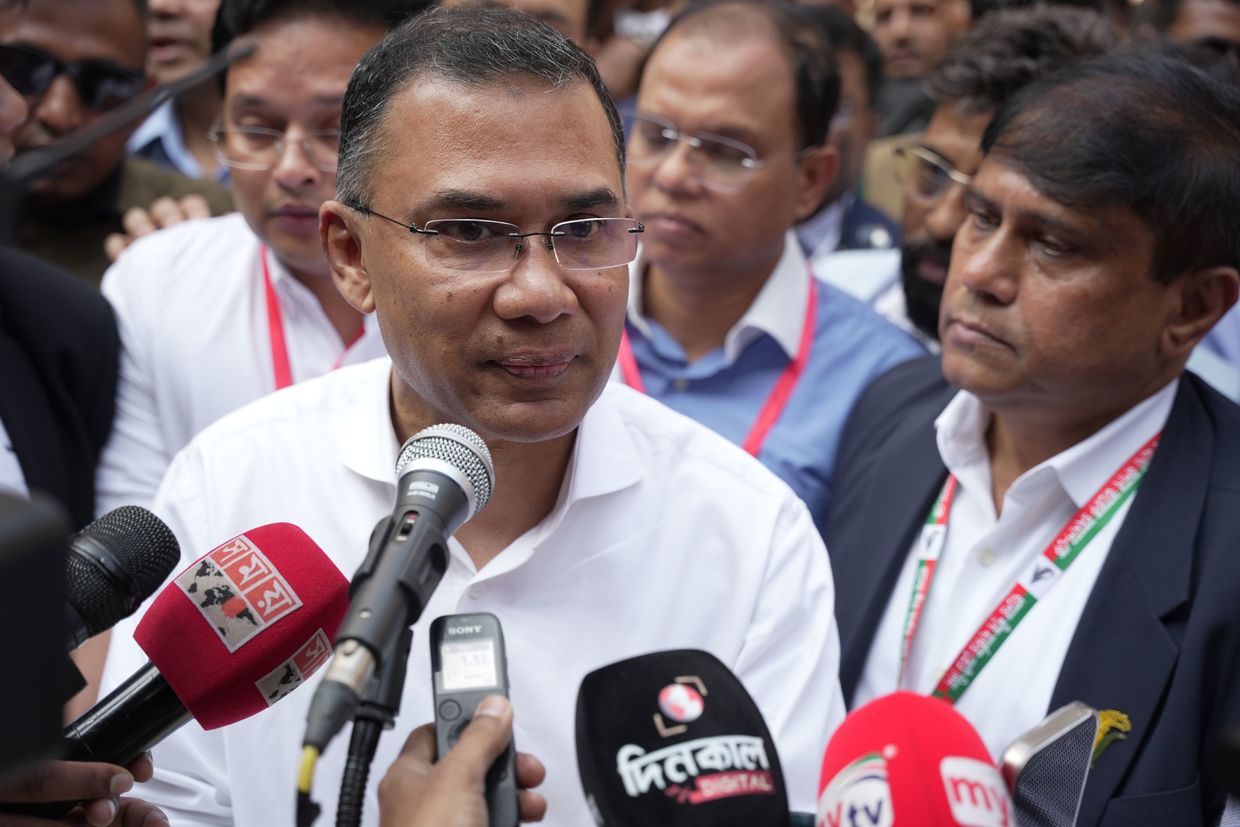
As the election results were announced, Indian Prime Minister Narendra Modi offered his congratulations to BNP and its leader. “I convey my warm congratulations to Mr Tarique Rahman on leading BNP to a decisive victory in the parliamentary elections in Bangladesh,” the prime minister said in a post on X. “This victory shows the trust of the people of Bangladesh in your leadership.”
While relations between New Delhi and Dhaka during BNP’s rule back in 2001-2006 were not as stable as during Hasina’s government, ahead of the election Rahman called for “reset” based on “equality and mutual respect.”
Bangladesh remains one of the top priorities for India, but it has also emerged as a point of contention between the US and China. Washington’s ambassador to Dhaka Brent T. Christensen told Reuters before polling day that the US is concerned about China’s expanding presence in South Asia and is planning to offer Bangladesh’s next government US and allied defense systems as alternatives to Chinese hardware.
He added that “The US offers a range of options to help Bangladesh meet its military capability needs, including US systems and those from allied partners, to provide alternatives to Chinese systems,” he said without offering further details.
Beijing reponded by saying “the U.S. Ambassador to Bangladesh was singing the same old tune again, pointed fingers at China-Bangladesh relations and was mixing black and white. Such remarks are made with ulterior motives.”
Notably, the Yunus-led interim government has signed a trade deal with US just three days before voters went to the polls. While the move benefits some of the country’s vital industries, including exporters of ready-made garments, it also has many hidden pitfalls, including commitment from Bangladesh to step up defense and energy purchases from the US, as well as a ban on purchasing nuclear reactors, fuel rods, or enriched uranium from any country that “jeopardizes essential US interests,” effectively vetoing Dhaka’s future nuclear cooperation with Russia or China.
Russia is currently implementing a giant nuclear energy project in Bangladesh, the Rooppur nuclear power plant, the deal for which was signed back in 2011 under Hasina’s government. After the tripartite memorandum in 2018, India was brought onboard to provide personnel and technical assistance for the development of the plant.
The domestic political turmoil of 2024 raised concerns over the timely implementation of Russia’s Rooppur project, which was in the final stages of completion by mid-2024, although officials from both countries stated that the project won’t be impacted as it is vital for the country’s growth.
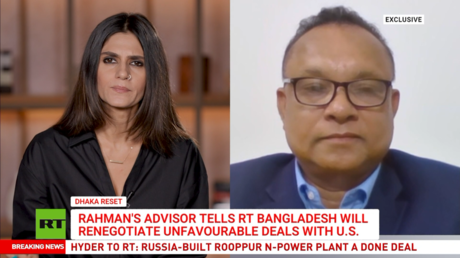
On Friday, soon after the announcement of election results, Ziauddin Hyder, adviser to BNP chairman Tarique Rahman, told RT India’s Runjhun Sharma that Rooppur NPP is a “done deal” while BNP could “renegotiate” the deal with the US if it is found “unfavorable” for the country.









 Like
0
Like
0
 Dislike
0
Dislike
0
 Love
0
Love
0
 Funny
0
Funny
0
 Angry
0
Angry
0
 Sad
0
Sad
0
 Wow
0
Wow
0