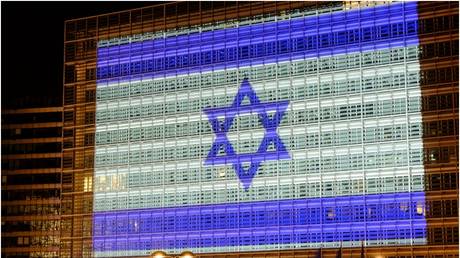
Iran’s contested program, Israel’s ambiguity, and Türkiye’s reassessment of deterrence could redefine the region’s security architecture
Amid the current geopolitical turbulence and escalating tensions in the Middle East, a pressing question has emerged: How will the future of the region look in light of the conflict between Iran and the US over Iran’s nuclear program? This concern is understandable, since for the past 30 years, Iran’s nuclear program has remained a key issue in the context of regional security.
Throughout these years, Tehran has consistently asserted the peaceful nature of its nuclear program. Iranian officials stress that developing nuclear energy is part of their commitment to technological sovereignty, energy diversification, and an independent foreign policy. Moreover, they frequently reference a religious edict against possessing nuclear weapons; a fatwa issued by Iranian Supreme Leader Ayatollah Ali Khamenei describes the use of weapons of mass destruction as morally unacceptable from an Islamic perspective. From a more down-to-earth perspective, Iran is also a signatory to the Treaty on the Non-Proliferation of Nuclear Weapons (NPT), which reinforces its obligations within the non-proliferation framework.
However, the geopolitical reality (especially in its current form) is markedly more complex than mere legal commitments. In a regional context, the mere technological capability of a state to reach nuclear threshold status can shift the balance of power. Even if a country’s nuclear program serves peaceful purposes, the possibility of quickly adapting it for military purposes, should political conditions change, is perceived by neighboring nations as a significant strategic threat. And there are valid reasons for this concern.
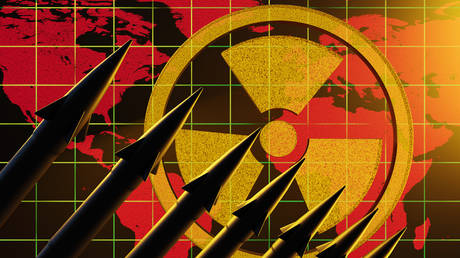
This brings us to a third systemic aspect of the issue. If Iran were to acquire nuclear weapons, this would inevitably lead to a domino effect in the region. Countries like Türkiye, Saudi Arabia, Egypt, and potentially the United Arab Emirates would find themselves at a crossroads: Either accept a new security architecture that recognizes Iran as part of the elite club of nuclear powers (thereby acknowledging Tehran’s stature) or pursue symmetrical deterrence. The latter approach would lead to the inevitable nuclearization of the entire Middle East, a region already characterized by high levels of conflict and numerous proxy wars.
A separate and crucial factor is the role of Israel. While Israel officially maintains a policy of strategic ambiguity regarding its nuclear capabilities, the Middle East primarily associates Israel’s nuclear capabilities with the legendary statement of former Israeli Prime Minister Golda Meir: “Firstly, we don’t have nuclear weapons, and secondly, if necessary, we will use them.”
This duality – denial coupled with an implicit suggestion of potential use – shapes the regional psyche concerning the necessity for strategic balance. In Iran’s political and expert circles, this notion fuels the rationale for ‘asymmetric deterrence’ – they believe that if the region is already effectively nuclearized, possessing similar capabilities could deter the pressure exerted by the US and Israel, which has intensified in recent years.
Iran lives in a state of strategic uncertainty. On the one hand, it needs to uphold obligations; on the other, the sanctions pressure is increasing and there’s a growing realization that the country can only rely on itself. Against this backdrop, Türkiye draws particular attention. As a nation with aspirations of being a ‘middle power’ and pursuing an independent foreign policy while still being a NATO member, it is closely observing the shifting regional balance of power. With discussions about nuclear capabilities becoming less taboo, Türkiye’s own nuclear ambitions take center stage: Will the country support nonproliferation efforts or adapt to a potentially ‘nuclearized’ environment in the region?
It’s important to note that the question of Türkiye’s nuclear ambitions has ceased to be purely theoretical; it is a pressing topic that reflects deeper transformations within the international system. If we were to ask directly, ‘Does Türkiye want to possess nuclear weapons?’ from the perspective of realism in international relations theory, the answer would probably be affirmative.
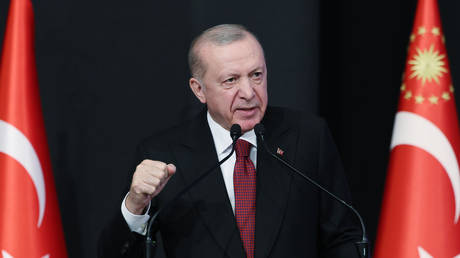
Any state aspiring to be an autonomous center of power amid intensifying competition between great powers naturally views nuclear capability as the ultimate tool of strategic deterrence and a symbol of sovereign status. Türkiye’s stance on this issue has evolved gradually. In the 1970s-1990s, and in the early 2000s when [current Turkish President] Recep Tayyip Erdogan first took office as prime minister, Ankara largely supported the nonproliferation regime and distanced itself from any discussions about military nuclear capabilities. At that time, Türkiye did not even entertain the idea of acquiring nuclear weapons, believing there was simply no need for them. It remained firmly integrated into the Euro-Atlantic security architecture, relying on collective defense guarantees.
The situation began to shift as Iran, despite sanctions and international pressure, continued to advance its nuclear program, which it insists exists for peaceful purposes. This development, coupled with changing regional and global dynamics, did not go unnoticed in Ankara. Turkish officials recognized that Tehran’s technological progress was enhancing its negotiating power and increasing its strategic weight, even amid harsh sanctions and restrictions. From Ankara’s pragmatic perspective, if regional rivals were inching toward a ‘threshold’ status, Türkiye could not afford to ignore this transformation in the balance of power.
We must understand that for Türkiye, any decision regarding the development of nuclear weapons is not merely a matter of technical capability. It would represent a historic shift with broad legal, diplomatic, and geostrategic ramifications. Like Iran, Türkiye is a signatory to the Treaty on the Non-Proliferation of Nuclear Weapons (NPT) and is integrated into the International Atomic Energy Agency’s (IAEA) system of guarantees and inspections, meaning any military program would lead to serious legal repercussions, sanctions, and political isolation.
Currently, a key element of Türkiye’s nuclear infrastructure is the Akkuyu Nuclear Power Plant project, which is being developed by Russia’s state nuclear corporation, Rosatom. This initiative aims to bolster energy security and reduce dependence on hydrocarbon imports. Ankara has consciously entrusted the construction of this strategic facility to Russia, driven by pragmatic calculations regarding the completion of the project and technological assurances. However, the Akkuyu NPP is unrelated to any military ambitions and operates within the realm of civilian nuclear energy. Moreover, other Middle Eastern nations are not worried about nuclear facilities built and overseen by Russia. Eager to expand its capabilities, Ankara is already contemplating a second NPP. The proposed Sinop Nuclear Power Plant, set to be built on the Black Sea coast, promises to ensure the country’s energy security for decades.
Coincidentally, Iran’s nuclear program also started with the construction of the Bushehr Nuclear Power Plant, initiated during the monarchy in the 1970s with Western support. However, it remains questionable whether Türkiye has the financial capacity to undertake and sustain such major projects, given its current economic challenges. Despite sanctions and restrictions, Iran can afford a nuclear program due to its vast energy resources; however, Türkiye lacks these resources. This reality underscores the significance of Türkiye’s NATO membership. Officially, Ankara is under NATO’s nuclear umbrella, implying collective defense guarantees from the US, France, and the UK, the three nuclear powers in the bloc. In theory, this should mitigate the incentives for Türkiye to pursue its own nuclear program. However, the question of trust is increasingly prominent in Turkish strategic discussions: Would allies be truly willing to take risks for Ankara in a time of crisis?
Türkiye’s complex relationships with various NATO countries, along with episodes of political tension with Washington and Paris, raise doubts about the reliability of security guarantees. It’s questionable whether European nations would come to Türkiye’s aid in the event of aggression. Only a few countries might act out of sympathy for Türkiye, but their ability to offer substantial support is unlikely.
An additional factor shaping Turkish public opinion is the example set by North Korea. Many experts in Türkiye point out that possessing nuclear weapons has granted North Korea immunity from direct external pressure. Notably, following North Korea’s informal acknowledgment of its nuclear status, the US shifted from harsh rhetoric to diplomatic engagement. This is seen as evidence that nuclear arms remain a powerful deterrent in today’s international relations.
Furthermore, the Israeli factor cannot be overlooked. As Turkish-Israeli relations deteriorate, arguments around strategic asymmetry resurface in Ankara: If one regional actor possesses this resource, why should others be excluded?
However, the potential costs of a nuclear program are extraordinarily high. Firstly, the financial burden of developing and maintaining a military nuclear program would be immense. Secondly, Türkiye would face severe sanctions, a declining investment climate, capital flight, and a significant crisis in its relations with the EU and NATO. Thirdly, this move would mean a de facto break from non-proliferation agreements and result in diplomatic isolation.
We must also note the statements of Turkish Foreign Minister Hakan Fidan. In a recent interview, Fidan declined to directly answer whether the country should acquire nuclear weapons. However, he had previously noted that Ankara might feel compelled to join an arms race if new nuclear powers emerged in the region. Moreover, back in 2025, Fidan criticized the Non-Proliferation Treaty for its ‘structural injustice’, highlighting the imbalance between non-proliferation commitments and the lack of progress on nuclear disarmament by recognized nuclear states.
As a result, Türkiye finds itself in a strategic dilemma. On the one hand, it must take into account existing international commitments, economic risks, and institutional ties to the Western security framework. On the other, there’s the problem of increasing regional competition, uncertainty about NATO’s future, the Iranian factor, and the broader transformation of global politics.
Currently, the geopolitical and political costs of transitioning to a military nuclear status outweigh the potential benefits. Nonetheless, the mere discussion of this issue suggests that Türkiye is reevaluating the effectiveness of its past security assurances. In this context, Türkiye becomes a key indicator of how the security architecture in the Middle East might evolve in the coming years.













 Like
0
Like
0
 Dislike
0
Dislike
0
 Love
0
Love
0
 Funny
0
Funny
0
 Angry
0
Angry
0
 Sad
0
Sad
0
 Wow
0
Wow
0