John Mearsheimer discusses the Ukraine war, Trump’s diplomacy, the legacy of 9/11 and the global shift from unipolarity to a multipolar order
American political scientist John Mearsheimer has claimed that the Ukraine conflict can’t be resolved diplomatically because the two sides’ goals remain irreconcilable and it will ultimately be settled on the battlefield.
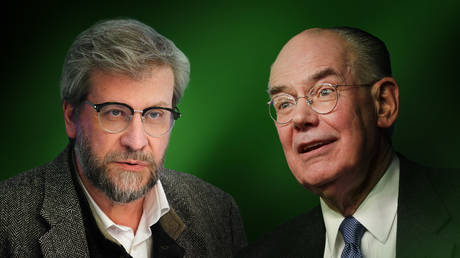
Mearsheimer made the remarks during a visit to Moscow in an interview with Fyodor Lukyanov, chairman of the Presidium of the Council on Foreign and Defense Policy and editor-in-chief of Russia in Global Affairs.
Fyodor Lukyanov: John, if a time machine brought great diplomats like Metternich and Talleyrand into the present day, what would they do to stem the bloodshed and bring today’s conflicts to an end? Would they succeed?
John Mearsheimer: Well, they were definitely skilled diplomats. And if we talk about the Ukraine-Russia war, they would go to great lengths to try to solve that. But I think that they’d be unable to do it. I don’t think that war, the Ukraine war, can be settled diplomatically. I think it’s going to be settled on the battlefield.
Now you say to yourself, why do I think it can’t be settled diplomatically? It’s because Russia’s goals are unacceptable to Ukraine, and Ukraine’s goals are unacceptable to Russia. For example, Ukraine wants the territory that Russia has annexed returned to Ukraine.
It views the Donbass, Zaporozhye, and Kherson as sacred territory. And from Ukraine’s point of view, it’s completely unacceptable that Russia be allowed to annex that territory. Furthermore, Ukraine, given what’s happened, wants a security guarantee, either from NATO or from the United States, to protect it moving forward.
This is unacceptable to the Russians. Furthermore, it’s unacceptable to the Russians to give up the territory that they’ve now annexed. So how can you have a diplomatic agreement between the two sides when there are such stark differences? Ukraine is simply unwilling to give up those four oblasts and Crimea, which Russia has annexed.
And Russia is unwilling to allow Ukraine to have that territory back. Furthermore, Ukraine wants a security guarantee from the West. It wants to be part of NATO, which is understandable from Ukraine’s point of view. But Russia certainly doesn’t want Ukraine in NATO. That was the principal cause of this war to begin with. So you see that the Russians and the Ukrainians are directly at odds on key issues where they’re unwilling to compromise.
Fyodor Lukyanov: All right, then what would victory actually look like? Would winning the war mean eliminating Ukraine as such?
John Mearsheimer: I don’t think that the Russians are going to eliminate Ukraine. I think that’s almost impossible. I think what the Russians are going to do is they’re going to take a substantial portion of Ukrainian territory. They already have taken probably about 20%, and I think they’ll ultimately try to take considerably more territory from Ukraine. But they will not conquer all of Ukraine.
Furthermore, Ukraine will be, when this war is over, a dysfunctional rump state. And the Russians will have a vested interest in making sure that Ukraine remains a dysfunctional rump state, so that it can’t join NATO, and so that it doesn’t present a threat to Russia. So I think what you’re going to get here at some point is a frozen conflict, not altogether unlike what you have in Korea.
The Ukrainians will never accept the idea that Russia has conquered all this territory. The Ukrainians and the [Western] Europeans, for that matter, will not accept the new status quo. They’ll want to go back to the borders, the pre-2014 borders.
And the Russians, of course, will want to make sure that doesn’t happen, because the Russians live in fear that Ukraine will become part of the West, and it will become a Western bulwark on Russia’s borders. So what you see is that once you get this frozen conflict, Russia will have a deep-seated interest in making sure that Ukraine remains a dysfunctional rump state.
This is one of the reasons I think the Russians are likely to try to take Odessa and to take the Black Sea coast away from Ukraine, because the Russians will see that as an important way of weakening Ukraine in the future. And again, Russia will have a vested interest in weakening Ukraine.
And from Ukraine’s point of view, it makes perfect sense to see Russia as an existential threat, to want to have help from the West to deal with Russia, and to want to get its sacred territory back. I fully understand how the Ukrainians think, but that’s unacceptable to the Russians. So if you have these two parties to a conflict, one, the Russians, and two, the Ukrainians assisted by the Europeans, who have irreconcilable differences, there’s no diplomatic way out.
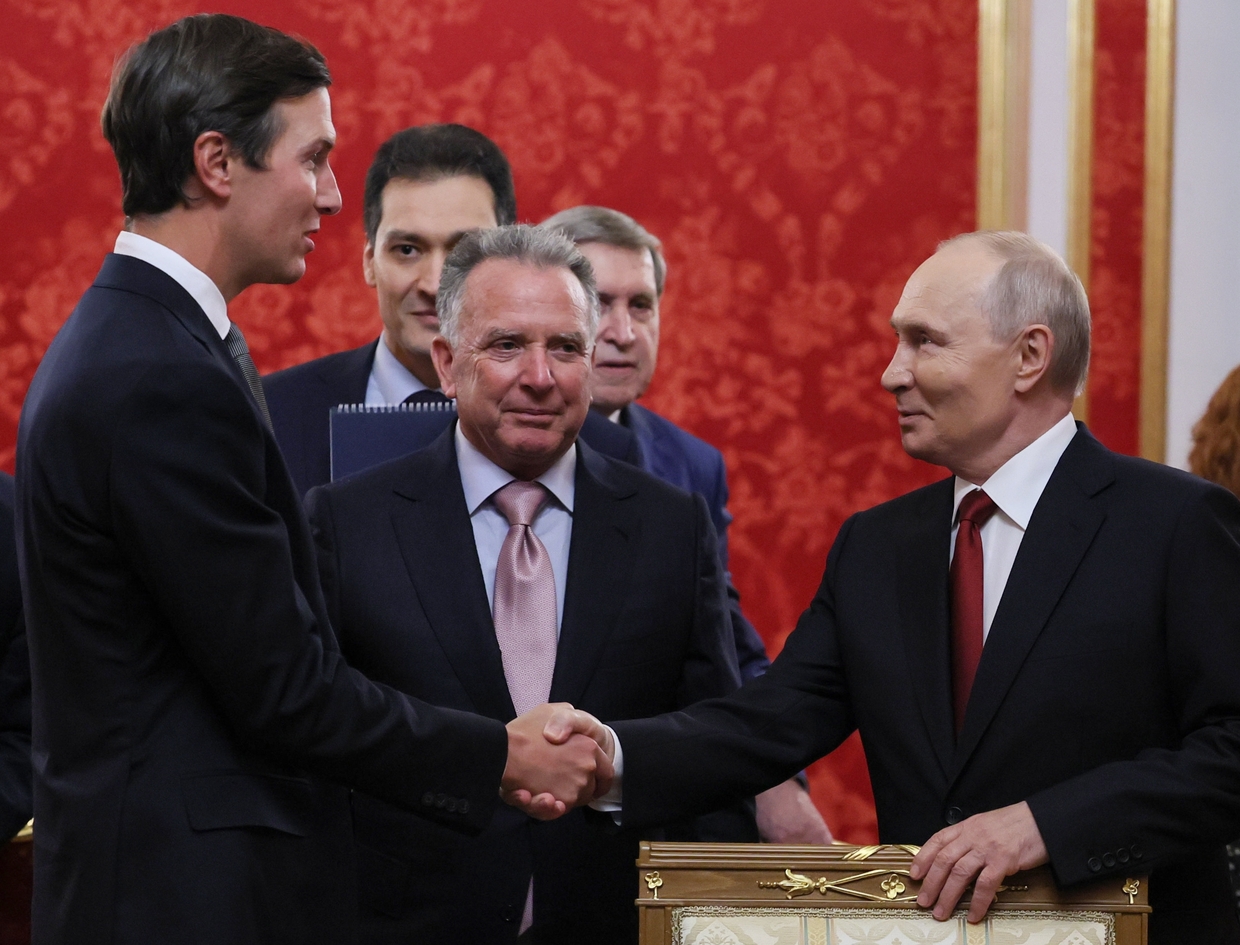
Fyodor Lukyanov: Does it mean that all efforts made by the Trump administration, Kushner, Witkoff and others are just a waste of time?
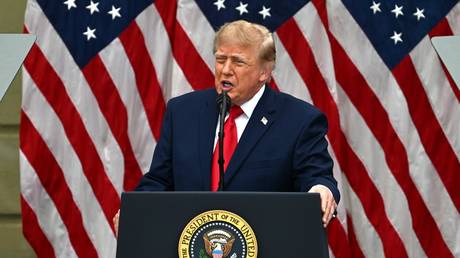
But there are two problems. One is the structural problem that I just described to you, the fact that the warring parties have irreconcilable goals. That’s point number one. And point number two is that President Trump is an inept or poor negotiator. He views himself as somebody who is brilliant at cutting deals, and he can easily shut down the Ukraine-Russia conflict in his own mind.
But exactly the opposite is true. He’s a ham-fisted, inept diplomat, and he hasn’t even come close to shutting down this war as a result of his ineptitude.
Fyodor Lukyanov: We have just marked the 25th anniversary of the September 11 attacks. Looking back a quarter of a century later, how would you assess their significance from the perspective of great-power politics?
John Mearsheimer: Well, 9-11 has nothing to do with great power politics. It’s just very important to understand that. 9-11 took place during the unipolar moment, when the United States was the only great power on the planet, and there was no great power politics, because you didn’t have rival great powers that could compete with each other.
And what happened with regard to 9-11 is that a small group called Al-Qaeda, which hated US Middle East policies, found a way to attack the United States and cause serious damage, and then led the United States to launch the global war on terror, which led to a number of the forever wars that we became involved in, especially Afghanistan and Iraq. And both these wars were disasters. Our response to 9-11 was badly mistaken. There was no need to launch a global war on terror. We just got ourselves into even more trouble.
But it had nothing to do with great power politics.
Fyodor Lukyanov: Could that moment be seen as the beginning of the end of the unipolar world, as some argue?
John Mearsheimer: I think that you can make that argument. I think that the 1990s were the heyday of the unipolar moment. But Russia was in terrible shape during the 1990s. And remember, Putin comes into power in roughly 2000, right? The end of ‘99, Putin comes into power. And I believe Putin resurrects the Russians from the dead.
But during the 1990s, Russia was badly weakened. And China hadn’t grown significantly by 2001. In fact, it’s not until 2001 that China joins the WTO. And when China joins the WTO, its economic growth really takes off.
And that’s a fundamental change that has drastically altered international politics. The United States was much freer to intervene around the world during the unipolar moment because there were no great power competitors, and it was free to get itself into all sorts of trouble in places like Afghanistan and in Iraq.
But then came multipolarity, and now the United States has to worry above all else about rival great powers.
Fyodor Lukyanov: Why do you single out 2017? As far as I can see, nothing particularly significant happened that year. In 2014, there was Crimea; in 2015, Syria. So why 2017?
John Mearsheimer: Well, what I’m concerned about is the balance of power. And the question is, when you look at Russia in the 1990s and in the very early 2000s, it has hardly any meaningful military power. Its military has really been wrecked. And what you see around 2015, 2016, 2017, is that the Russian military is much more effective than it had been in the previous decade and a half.
And I think this is largely the doing of Putin. I think Putin went to great lengths to help restore the Russian economy. And as the Russian economy began to flourish, the Russians were able to translate a lot of that economic might into military might.
So, by about 2016-2017, most assessments from places like the RAND Corporation about the Russian military say that Russian military power is now quite formidable. Obviously, the Russians in 2017 were not as powerful as the Soviet Union was at any point during the Cold War.
But the Russian military by 2017, and this of course is true of the Chinese military as well, looks like a quite formidable instrument. See, my argument is if you’re going to talk about going from unipolarity to multipolarity, you’re basically asking yourself the question, when do countries like China and Russia become great powers?
And for me, a great power is a country that has sufficient military power to put up a good fight against the most powerful state in the system. And of course, this is the United States. And again, I think by 2017, most security analysts in the United States believe that the Russian military was a quite formidable instrument and was quite well positioned to put up a serious fight against the United States.
And given that military power, the restoration of military power in Russia, I think that was the basis that people used to make the case that Russia was once again a great power. And just to say one more thing on this, I think everybody understood that Russia was and still is today the weakest of the three great powers.
I think the United States remains the most powerful state on the planet. I think the Chinese are now a close second. And I think there is a danger moving forward that China could overtake the United States.
And I think the Americans or most American foreign policy elites or the American foreign policy elite is very worried about that possibility. So China, in a very important way, is the real peer competitor, not Russia.
But Russia is still a great power, I think that everyone recognizes that. And I think that’s why the United States cares so much about the Ukraine war. And I think the reason that President Trump is interested in stopping or ending the Ukraine war and having good relations between Russia and the United States is because Trump understands that Russia is a great power.
And from an American point of view, it would make much more sense for the United States to be allied with Russia against China, or at least have Russia neutral, rather than create a situation where we have, in effect, driven the Russians into the arms of the Chinese.
I mean, if you think about living in a multipolar world where there are three great powers, if you’re the United States and this is China, you want Russia on your side of the ledger. But instead, because of our foolish policies regarding Ukraine, we’ve driven the Russians into the arms of the Chinese.
And again, I think Trump’s basic instincts about the importance of settling the Ukraine war and getting Russia on good terms with the United States is driven in good part by his insight or his belief that China is the real threat for the United States.








 Like
0
Like
0
 Dislike
0
Dislike
0
 Love
0
Love
0
 Funny
0
Funny
0
 Angry
0
Angry
0
 Sad
0
Sad
0
 Wow
0
Wow
0