The test flight was aborted after some of the rocket’s engines failed to start, Elon Musk has said
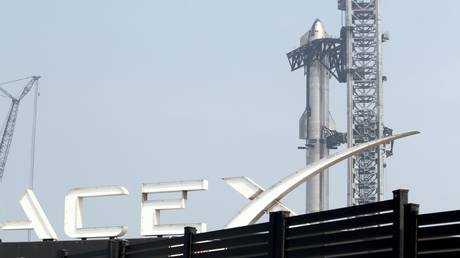
The 13th test flight of SpaceX’s Starship ended abruptly after an engine malfunction forced an automatic launch abort seconds before liftoff on Thursday.
A live stream from the Starbase launch site in Texas showed clouds of smoke and vapor billowing from the rocket as its engines ignited. However, Starship failed to leave the pad.
“We did trigger a hold on the booster that aborted our liftoff as we were starting to light those Raptor engines,” SpaceX spokesperson Dan Huot said during the webcast.
SpaceX CEO Elon Musk later confirmed on X that “some of the engines didn’t start, triggering an automatic launch abort.”
“Next launch attempt hopefully in a few days,” he added.
The mission was set to deploy 20 of the latest Version 3 Starlink satellites into orbit.
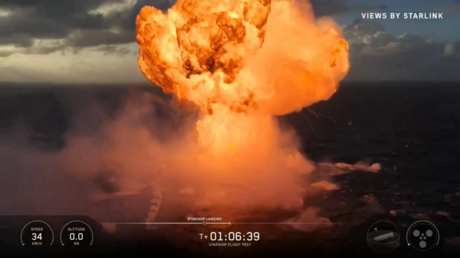
The aborted launch follows several upgrades made after Starship’s previous test flight in May, when a simulated landing of the Super Heavy V3 booster in the Gulf of Mexico ended in an explosion.
The upper-stage Starship also broke apart after splashing down in the Indian Ocean, although SpaceX still declared the mission a success.
The latest setback sent SpaceX shares down to $131.11 early on Friday, leaving them below the company’s IPO price of $135. The stock had already slipped to $132.28 on Wednesday amid growing investor concerns over whether the company can generate enough profit to justify its trillion-dollar valuation.
SpaceX went public last month in a record $75 billion offering that briefly made Musk the world's first trillionaire.
The company is competing with Jeff Bezos’ Blue Origin to build lunar landers for NASA’s Artemis program, which aims to return astronauts to the Moon by landing near its south pole.
Earlier this week, Russia successfully launched a Soyuz-2.1a rocket from the Baikonur Cosmodrome in Kazakhstan, carrying Russian cosmonauts Pyotr Dubrov and Anna Kikina, along with NASA astronaut Anil Menon, to the International Space Station.













 Like
0
Like
0
 Dislike
0
Dislike
0
 Love
0
Love
0
 Funny
0
Funny
0
 Angry
0
Angry
0
 Sad
0
Sad
0
 Wow
0
Wow
0