Extended truce, renewed war, or endless strikes – each reshapes the region in Iran’s favor
The almost apocalyptic rhetoric from US President Donald Trump, who threatened that “a whole civilization will die tonight,” suddenly gave way to de-escalation. By the evening of April 7, it was announced that the US and Iran had agreed to a two-week ceasefire; shortly afterward, Israel confirmed it would join. Over these two weeks, negotiations toward a permanent peace deal are due to be held with Pakistan acting as mediator.
This is exactly the scenario we saw as the most likely from the very beginning of the conflict.
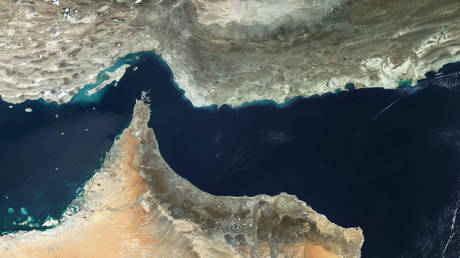
The war could still resume (we’ll get to that below), but for now it looks like things are moving toward a reality where the Persian Gulf is, in fact, becoming Persian. Iran now effectively controls shipping in the Gulf and holds the Arab oil monarchies at risk – and the US appears to be accepting that.
Let’s assume the pause in hostilities lasts months – or even years. That’s entirely plausible: even if a formal peace deal doesn’t materialize, the ceasefire could simply be extended over and over again.
In that case, the top priority for the Arab states will be building a new generation of air defense. The blueprint is fairly clear: rely on cheap, mass-produced interceptors, whether ground-based (such as Russia’s Pantsir) or air-launched (like APKWS). Both Arab states and Israel will likely focus on this, alongside replenishing their traditional air defense stockpiles.
The second priority will be diversifying logistics – building new pipelines to the Red Sea and finding alternatives to Gulf shipping routes. The goal is obvious: break free from Iran’s Strait of Hormuz chokehold and reduce its leverage. That said, for countries like Qatar, Bahrain, Kuwait, and Iraq, pipelines across the Arabian Peninsula would mean dependence on another regional power – Saudi Arabia. And, of course, transit fees would apply.
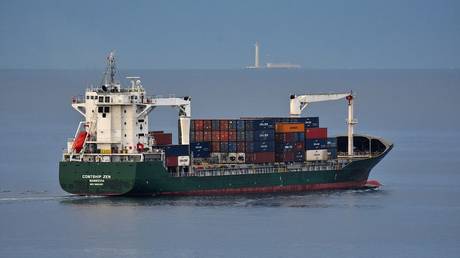
None of this solves the core problem. The geography of the Gulf makes full protection impossible. Across more than 500 nautical miles (about 1,000 km) – like something out of an old arcade shooter – every shipping lane is within Iran’s reach. Along the coastline, ports, factories, desalination plants, oil storage facilities, data centers, hotels, and skyscrapers sit exposed like targets at a shooting range. Defending all of that from the sea is extremely difficult, and for the time being, the Arab states will likely choose to pay for safe passage.
At the end of the day, they don’t really care who provides that security umbrella. They used to pay the US; now they’ll pay Iran. The price isn’t even that steep – reportedly around $2 million per supertanker, which is just 2-3% of the value of the oil onboard. And ultimately, the buyers will foot the bill anyway.
In the East, one of the highest marks of a wise ruler is the ability to impose tribute on neighbors and make them acknowledge your authority. That principle is well understood in both Iran and the Arab world. Ironically, the US and Israel may have helped bring about a new regional order that actually fits local political logic.
Now Washington and West Jerusalem will face a long, uphill battle to rebuild their influence – and any move they make will be viewed with skepticism by Arab states: what if it all falls apart again? The alpha wolf missed his mark.
Scenario 2: Renewed escalation
It’s entirely possible that in two weeks the war could flare up again – potentially with even greater intensity. Iranian negotiators could be targeted again, triggering an earlier collapse of the ceasefire. Still, we see this as relatively unlikely: despite the considerable military capabilities of the US and Israel, they currently lack a clear path to decisively defeat Iran through conventional means.
Realistically, short of a nuclear scenario, the coalition has two main options.
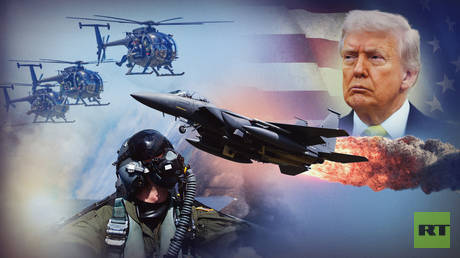
The first is a campaign of intensive strategic bombing aimed at “bombing Iran back into the Stone Age.” That would require US strategic bombers to operate directly over Iranian territory – a risky proposition, as the incident near Isfahan demonstrated. In such conditions, B-52 bombers would actually be more vulnerable than modern fighter jets – they’re as easy to shoot down as civilian airliners, even for relatively outdated air defense systems.
Meanwhile, Iran’s missile capabilities have not only survived but shown signs of recovery and increased operational tempo. And US forces have been unable to seriously disrupt Iran’s drone launch infrastructure (including Shahed-type UAVs). That means any large-scale bombing campaign risks triggering significant retaliatory damage – especially against the oil-producing Arab monarchies – prolonging and deepening the global oil shock and potentially pushing the world toward a financial crisis.
Israel would also be exposed. According to a JPMorgan report citing the Jewish Institute for National Security of America, the success rate of Iranian strikes on Israeli territory has surged – from 3% at the start of the war to 27% by late March and early April – largely due to the strain and depletion of Israeli air defenses.
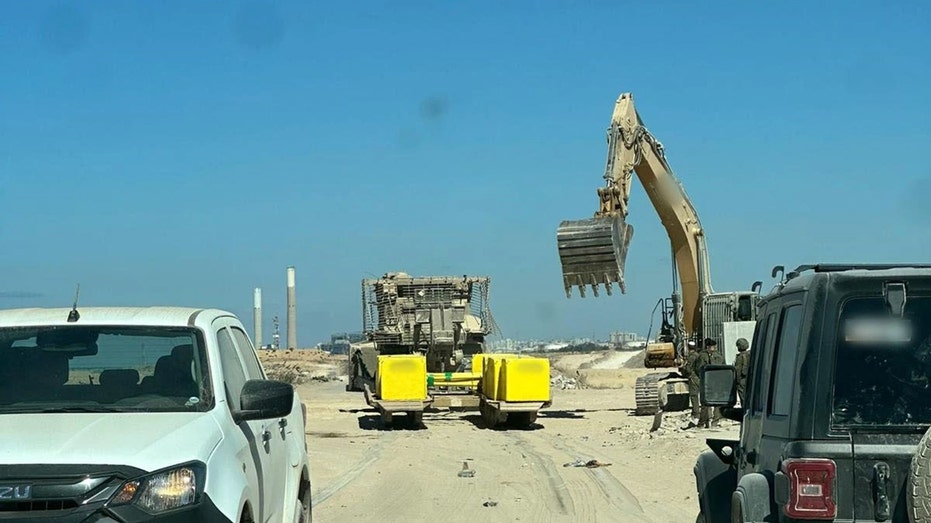
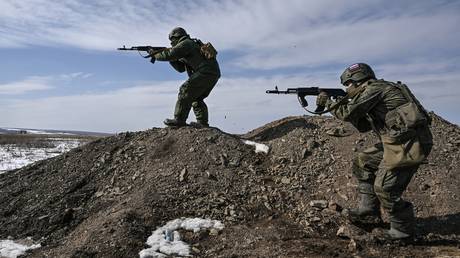
The second option – a large-scale ground operation, either along Iran’s coastline or against Iranian-controlled islands – comes with all the risks of air warfare plus inevitable heavy casualties. The upside? Essentially none. Limited amphibious raids would achieve little, while a full-scale invasion aimed at regime change is simply not feasible.
None of this means escalation is off the table. It means that before escalating, US and Israeli leadership would have to solve the same equation they faced at the start of the war – but now with far fewer unknowns. Iran’s resilience, its military capabilities, and the extent of US-Israeli international isolation are now much clearer.
If shipping through the Strait of Hormuz resumes and is then disrupted again by US or Israeli action, they would be widely seen as responsible for triggering a global economic crisis.
Scenario 3: Low-level clashes under Iranian control of Hormuz
This is essentially a variation of the first scenario – and, in our view, the most likely one. In fact, it already appears to be unfolding: Iran is accusing Israel of violating the ceasefire with new strikes and is threatening (and likely preparing) to retaliate.
If traffic through the Strait of Hormuz continues more or less uninterrupted, a pattern of ongoing tension and sporadic exchanges could become the new normal. Israel carries out strikes (or Iran claims it was attacked); Iran responds by temporarily shutting down the strait for a day or two – maybe launching a retaliatory strike of its own.
After a few weeks or months, this kind of news simply fades into the background – a constant, low-level risk. The region becomes less stable, but the rest of the world largely shrugs – as long as oil and other resources keep flowing out of the Persian Gulf.













 Like
0
Like
0
 Dislike
0
Dislike
0
 Love
0
Love
0
 Funny
0
Funny
0
 Angry
0
Angry
0
 Sad
0
Sad
0
 Wow
0
Wow
0