A vehicle drove through a busy shopping street in central Leipzig, leaving multiple people dead and injured
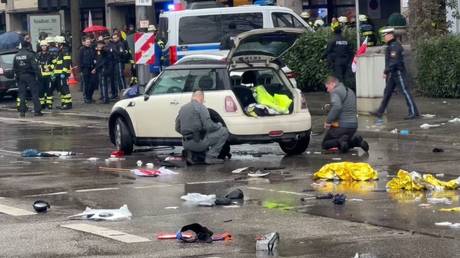
At least two people have been killed and several others injured after a 33-year-old suspect drove a car into a crowd in the eastern German city of Leipzig, according to local police.
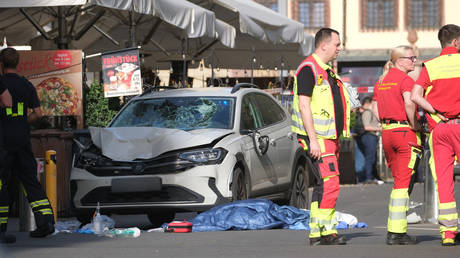
The incident took place at around 4:45pm on Monday on Grimmaische Strasse, a central shopping street linking key landmarks with the city’s market square. Leipzig’s fire chief said that more than 20 people had been “affected” after a white Volkswagen Taigo SUV sped through a pedestrian zone, hitting multiple people.
“Two were so severely injured that they died shortly afterward,” Leipzig police said in a press release, identifying the deceased as a 63-year-old woman and a 77-year-old man, both German citizens.
It was not immediately clear whether the incident was deliberate or an accident, but authorities said that, “according to current findings, a political or religious motive is not suspected.” The Leipzig public prosecutor’s office has launched an investigation into two counts of murder and multiple counts of attempted murder, among other charges.
The driver was detained at the scene. Police initially described the perpetrator as a “33-year-old German citizen,” but in the latest update referred to the suspect simply as a “man.”
Germany has seen multiple deadly vehicular attacks in recent years involving foreign-born individuals.
Last year, an Afghan national plowed through a rally in Munich, leaving dozens of people injured. A two-year-old girl and her mother later died in hospital from their injuries.
In December 2024, a 50-year-old Saudi psychiatrist drove into a crowd at a Christmas market in Magdeburg, killing five people and injuring more than 200 others.
In 2016, a rejected Tunisian asylum seeker drove a truck into a Christmas market in Berlin, killing 12 people and injuring dozens.
The attacks have intensified debate in Germany over migration and public security. Right-wing parties such as Alternative for Germany (AfD) have been pressing the government to shift migration policy, portraying migrants, particularly those from outside Europe, as a burden on public services and a driver of crime and social strife.











 Like
0
Like
0
 Dislike
0
Dislike
0
 Love
0
Love
0
 Funny
0
Funny
0
 Angry
0
Angry
0
 Sad
0
Sad
0
 Wow
0
Wow
0